
India U19 Squad Named for ACC Asia Cup in Muscat: Lakshya Raichandani to Lead, First Match Six Days After Announcement
बीसीसीआई ने एसीसी पुरुष अंडर-19 एशिया कप (5-14 नवंबर, मस्कट, ओमान) के लिए 15 सदस्यीय भारतीय टीम की घोषणा की है। कप्तान लक्ष्य रायचंदानी और उपकप्तान यशबर्धन सिंह चौहान हैं; टीम में दो विकेटकीपर अन्वय द्रविड़ और रजत बागेल शामिल हैं। भारत ग्रुप A में पाकिस्तान, यूएई और नेपाल के साथ है; ग्रुप B में बांग्लादेश, श्रीलंका, अफगानिस्तान और मलेशिया हैं। हर ग्रुप से शीर्ष दो टीमें सेमीफाइनल (12 नवंबर) में जाएंगी, फाइनल 14 नवंबर को है। भारत के लिए अधिकतम पांच मैच हैं। घोषणा 30 अक्टूबर को हुई, यानी पहले मैच से छह दिन पहले। बयान में फॉर्मेट, वेन्यू, मैचों का समय, खिलाड़ियों की भूमिका, आंकड़े, स्टैंड-बाय सूची और सहयोगी स्टाफ का उल्लेख नहीं है; 50 ओवर का फॉर्मेट एसीसी परंपरा के आधार पर संभावित माना गया है, अपुष्ट है।
The Board of Control for Cricket in India (BCCI) has announced a 15-member India squad for the ACC Men's U19 Asia Cup, to be played in Muscat, Oman from 5 to 14 November. Lakshya Raichandani has been named captain and Yashbardhan Singh Chauhan vice-captain, while the squad includes two specialist wicketkeepers in Anvay Dravid and Rajat Baghel. The selection was made on the recommendation of the Junior Cricket Committee. The advisory was issued on 30 October — only six days before the first match — and that gap is the single most operationally significant fact in the document.
It matters that the release is a bare administrative advisory. It contains no player roles, no domestic performance data, no state affiliations, no support-staff names, no venues, no match start times and no explicit statement of the format. That is not a criticism; it is the boundary of this report. Everything below distinguishes between what the release actually says and what can only be inferred.
Six days, and everything the advisory does not say
No pre-tournament camp, no warm-up fixture and no travel schedule is disclosed. For an age-group side assembling from different state units, a six-day turnaround compresses familiarisation with team-mates and with Muscat conditions to a minimum. That is an uncontrollable variable that can still shape results.
Tournament structure
The format is familiar: eight teams, two groups, top two from each group into the semi-finals. Group matches run 5-11 November, semi-finals on 12 November, the final on 14 November. India therefore play a maximum of five matches. Compressing 24 matches into roughly seven group-stage days across two groups implies multiple fixtures per day and almost certainly more than one venue. The advisory names neither — a notable omission for a squad announcement.
The overs per side are not stated. The ACC U19 Asia Cup has historically been a 50-over competition, and a schedule of three group games plus a semi-final and final inside ten days is consistent with that. This remains an assumption pending confirmation against the ACC playing conditions. If it is a 50-over tournament, three phases matter: the Powerplay, middle-overs spin control, and death-overs acceleration. No data exists on how this specific squad manages any of them.
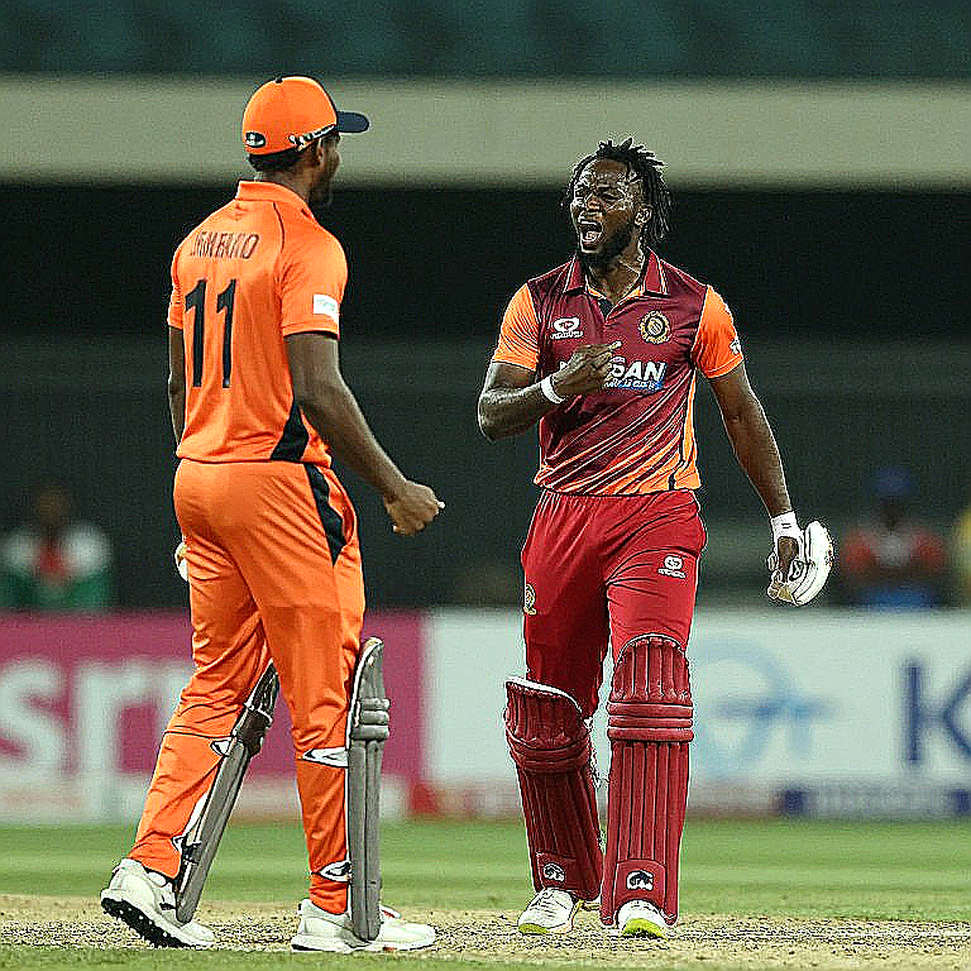
Group A: Pakistan, UAE and Nepal
India are grouped with Pakistan, the United Arab Emirates and Nepal; Group B contains Bangladesh, Sri Lanka, Afghanistan and Malaysia. On the surface this is balanced. In one specific respect, Group A is harder: it holds the fixture with the highest emotional and media load, plus the two most awkward sub-elite matchups.
The Pakistan game will decide the shape of the group. At age-group level, India-Pakistan results have historically been volatile and correlate poorly with senior-level hierarchy; the two boards organise their junior pathways very differently, and Pakistan's age-group sides have repeatedly produced results senior expectations would not predict. The fixture also carries a load from outside the field that is a genuine cricketing factor for young players.
The UAE are the conditions specialists. A Gulf-resident side will be the most familiar with hard, dry, low-bounce surfaces — the only case where a participant has a home-adjacent edge. Gulf venues have repeatedly produced uncomfortably close age-group matches between Full Members and the UAE. India's talent gap narrows marginally here.
Nepal are the highest-variance Associate in the group. Nepali cricket culture is spin-heavy and its age-group sides have a track record of raising performance against Full Members. This is not a free win.
The group stage is forgiving; the knockout is not
Because two of four teams advance from each group, India can lose one group game and still win the tournament. That materially lowers the sporting significance of the group stage relative to its narrative significance — an important distinction for anyone reading media reaction to the Pakistan fixture.
The competitive risk is concentrated in two matches, not five: the Pakistan game, which likely decides top spot and therefore the semi-final opponent from Group B, and the single-elimination semi-final. Net run rate is unlikely to be decisive, since one heavy win — most plausibly against the weakest side in the group — would settle it, which reduces any incentive to take risks chasing a fast rate.
Muscat conditions
Muscat is a neutral venue for all eight teams. Gulf square conditions typically produce hard, dry, low-bounce surfaces where the ball stops early and grip and spin increase through the afternoon. November in Oman is climatologically dry, with daytime highs around 28-32°C and low rain probability, so Duckworth-Lewis disruption risk is low.
Dew risk exists only if fixtures are day-night; the advisory does not state start times. If matches are day-night, evening dew substantially neutralises spin and makes chasing easier. If they are day games, the opposite holds and the side batting first on a drying surface gains. Because start times are unknown, the toss effect cannot be assessed. There is also no indication that DRS is in use at this level, and at age-group ACC events it is typically not deployed — unconfirmed, and no conclusion should rest on it.
Leadership structure
Formally naming both a captain and a vice-captain in a 15-man squad is a leadership-pipeline signal rather than a tactical one. At age-group level, dual designations typically indicate the board is tracking two players across a multi-year cycle — Asia Cup to the next U19 World Cup — not merely covering one match.
Raichandani's captaincy is the strongest available proxy for selectorial confidence. In BCCI junior selection practice, the captain is normally a player with an established domestic age-group record and frequently a top-order batting or frontline-bowling role. But the release states no role, no state and no record, so the inference cannot be verified and should not be read as a performance judgment. The same applies to the vice-captain. Both designations are confirmed; the cricketing reasoning behind them is not.
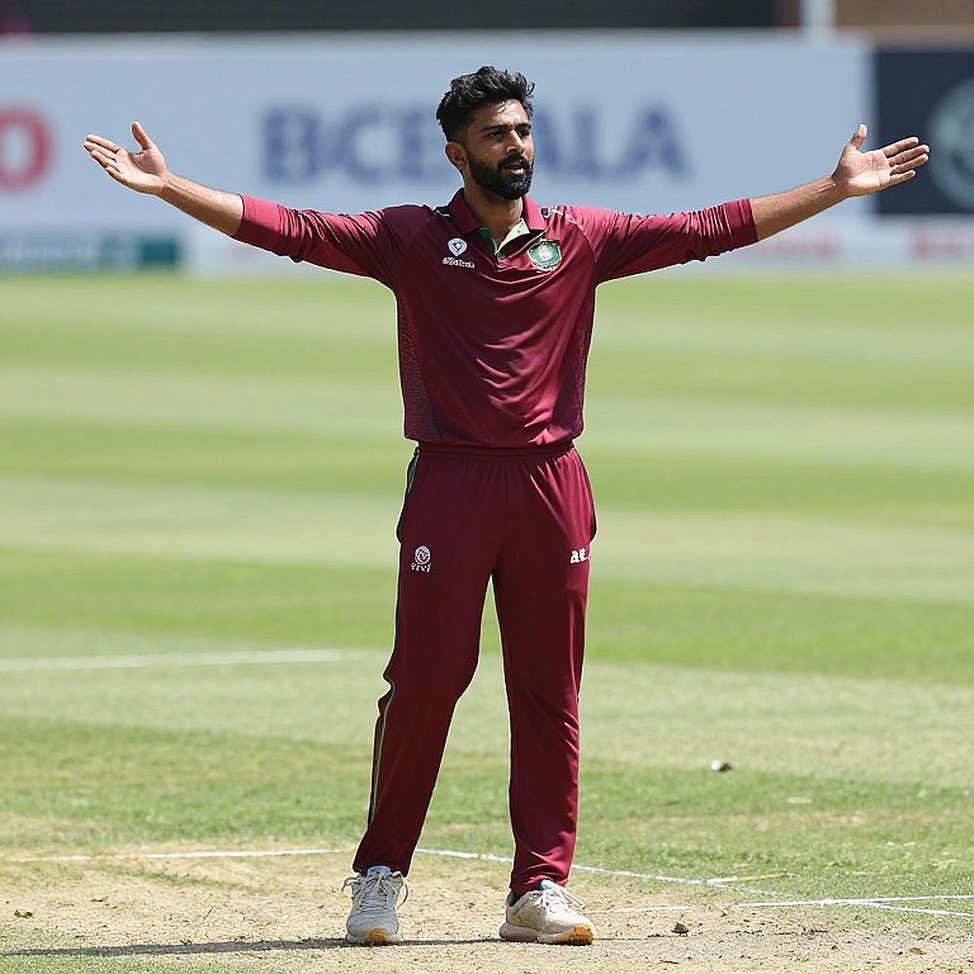
Two wicketkeepers — a deliberate trade-off
Two specialist wicketkeepers in a 15-man squad is standard construction: either one is expected to keep while the other is picked primarily as a batter, or the selectors want a genuine contest for the position through the group stage. With a maximum of five matches, at least one of them will spend most of the tournament on the bench. For a development age group this is a conscious trade-off: a genuine second keeping option over an extra seam-bowling body.
No stand-by list is published. BCCI junior releases frequently name two to four stand-bys; their absence here either reflects a change in disclosure practice or an incomplete advisory. If genuine, it removes the documented replacement pathway should a player be injured in Muscat.
No support staff — head coach, bowling coach, physio, trainer, manager — is named. That is atypical for a BCCI touring advisory, and the practical implication is that there is no basis to assess coaching continuity or the technical programme these players are entering. There is also no fitness or injury disclosure, so nothing can be said about availability.
The data vacuum
No player in this release is presented with a statistical headline. That is characteristic of a bare advisory, but it also means there is no data-based basis for ranking any of the fifteen against each other — and any public ranking that appears in the next fortnight will be reputation- or surname-derived rather than performance-derived. That is a structural feature of this information environment, not a criticism of the squad. Readers should treat 'form' narratives built on it accordingly.
Age-curve context matters too. At 16-19, year-on-year physical and technical change is the dominant variable. A five-match tournament result has very low predictive power for senior international outcomes, and the historical conversion rate from U19 Asia Cup squads to full India caps is low — the majority of any cohort does not reach senior international cricket.
Pedigree and ranking
The ICC does not publish rankings for U19 cricket, so no ranking-based positioning is possible. India is the most successful side in the history of the ICC U19 Men's Cricket World Cup with five titles, the clearest available proxy for the strength of its junior pipeline. Specific ACC U19 Asia Cup title counts remain pending verification. The venue is entirely neutral for India; the absence of home advantage is symmetric for seven of eight teams, with only the UAE holding a conditions edge.
Three unanswered questions that could decide the outcome
First and most consequential: India's bowling combination. The bowling type of none of the fifteen is stated. Gulf surfaces reward spin, and if India meet a side like Afghanistan in the knockout — whose junior strength is spin — spin depth could be decisive. There is no way of knowing whether the selectors have picked for the conditions.
Second: the shape of the batting order. With no roles disclosed, it is impossible to judge how many specialist openers, middle-order batters and finishers the squad contains.
Third: where the captain bats. The relationship between leadership and batting position is unstable in age-group sides and affects how pressure is managed.
The real risk is the knockout
The volatility of single-elimination cricket is well established. The group stage's generosity gives India room for one error; the semi-final does not. India's real examination could be decided on a single day — 12 November. And a maximum of five matches is an extremely thin basis for any judgment about any player, in either direction.
What to watch
The distribution of overs between bowlers in the first two group games, which will reveal how much the team management trusts spin. The wicketkeeping choice, which will show how highly the second keeper is rated as a batter. And the decisions taken after the toss in the knockout — particularly if fixtures are day-night and dew becomes a factor.
Conclusion
This is an administrative advisory and should be read as one. What is confirmed: a 15-player squad, clearly designated leadership, two wicketkeepers, a six-day preparation window, a Group A containing Pakistan and a conditions-suited UAE, and a knockout that is a single 100-over contest. What is not confirmed is considerably more — and the stories invented to fill that absence should be treated with caution.
Quick facts
- Squad: 15 players, selected by the Junior Cricket Committee
- Captain: Lakshya Raichandani | Vice-captain: Yashbardhan Singh Chauhan
- Wicketkeepers: Anvay Dravid, Rajat Baghel
- Tournament: 5-14 November, Muscat, Oman
- Group A: India, Pakistan, UAE, Nepal | Group B: Bangladesh, Sri Lanka, Afghanistan, Malaysia
- Semi-finals 12 November, final 14 November
- Maximum matches for India: five
- Format: not stated in the release; 50 overs likely by ACC precedent (unconfirmed)