
Mumbai Indians unveil coaching staff for IPL 2027: Uthappa and McClenaghan return home, McClenaghan succeeds Malinga
मुंबई इंडियंस ने आईपीएल 2027 के लिए चार सहायक कोच नियुक्त किए: रॉबिन उथप्पा (बल्लेबाज़ी कोच, आईपीएल में पहला बड़ा कोचिंग कार्यभार), मिचेल मैक्लेनघन (गेंदबाज़ी कोच, लसिथ मलिंगा की जगह; 2015-2020 तक MI के साथ, चार ख़िताब), टी दिलीप (फील्डिंग कोच, भारत के पूर्व फील्डिंग कोच) और धवल कुलकर्णी (डेवलपमेंट बॉलिंग कोच, पूर्व मुंबई तेज़ गेंदबाज़, 2013 व 2020 ख़िताब का हिस्सा)। तीन नियुक्तियाँ पूर्व MI खिलाड़ियों की हैं, जो फ्रेंचाइज़ी के एल्युमनी-आधारित मॉडल को दिखाता है। 'डेवलपमेंट बॉलिंग कोच' पद गेंदबाज़ी को निष्पादन और कौशल-विकास में बाँटता है — यह आईपीएल में असामान्य विशेषज्ञता है। ध्यान दें: घोषणा आईपीएल 2027 के लिए बताई गई है, जो सामान्य समय-रेखा से असामान्य है और सत्यापन लंबित है; मलिंगा के जाने का कारण नहीं बताया गया; और किसी भी नियुक्ति से प्रदर्शन-सुधार का दावा इस स्तर पर असत्यापनीय है।
Mumbai Indians on Friday announced their support-staff appointments for the IPL 2027 season, confirming four roles: Robin Uthappa as batting coach, Mitchell McClenaghan as bowling coach, T Dilip as fielding coach and Dhawal Kulkarni as development bowling coach. Three of the four are former Mumbai Indians players returning to the franchise; the fourth arrives with national-team pedigree, having previously served as India's fielding coach. The most consequential change is on the bowling side, where McClenaghan succeeds Lasith Malinga.
This is not a match report. It is an administrative appointment release, and it should be read as exactly that: a document about organisational structure, not performance. The release contains no player statistics, no match context, no venue detail and no tactical statement. Where the source is silent, this report marks the gap explicitly rather than speculating.
Uthappa: a first major IPL coaching role
Robin Uthappa's appointment is the least proven and the most debatable. He represented Mumbai Indians in the inaugural 2026 season and returns more than a decade later as batting coach. According to the release, this is his first major coaching stint in the IPL — a fact that defines the nature of the hire. This is not a proven quantity; it is a development bet.
His playing profile was top-order, powerplay-oriented batting, the phase that most directly shapes T20 win probability. But that is an inference, not a stated rationale. The franchise has not explained why he was chosen, what his remit will be, or which specific skill he will work on. In recent years he has been part of broadcast panels, which raises a second possibility: that part of his value lies in communicating with the Indian top order rather than overhauling technique. That is an inference, not a confirmed brief.
One caution is essential. Greatness as a batter is not a validated predictor of coaching effectiveness. The IPL has seen celebrated names fail in coaching roles and low-profile names succeed. A learning curve should be treated as a real variable in his early seasons.
McClenaghan: institutional memory of four titles
McClenaghan's appointment is structurally the lowest-risk of the four. He was with Mumbai Indians from 2026 to 2026 — six seasons, a long overseas stint — and the franchise won four titles in that window. MI's five IPL titles came in 2026, 2026, 2026, 2026 and 2026, and four titles inside 2026-2026 is fully consistent with that record. This internal consistency raises confidence in the factual layer of the release, even though it says nothing about coaching competence.
A left-arm seamer by trade, his expertise can plausibly be mapped to matchup planning and death-overs slower-ball craft — again, an inference, since the release does not define his remit. What is clear is that he carries insider knowledge of MI's bowling culture, and the franchise has chosen that knowledge as the vehicle for continuity after Malinga.
The silence around Malinga's exit
The release is explicit that McClenaghan replaces Malinga. It says nothing about why. Was the tenure complete, was the role redefined, is he moving to another league or team, or is this a performance-driven change? None of these questions is answered.
The silence matters. When a franchise that has just completed a weak cycle replaces a high-profile bowling coach without explanation, the story is not closed — it is in progress. The change could be the outcome of a review, or simply the end of a contract cycle. The difference is significant, and the available information cannot settle it.
T Dilip: the strongest external credential
As fielding coach, T Dilip represents the most verified appointment in the group. He is a former India fielding coach, and in the domestic market that is the top of the profession. The other three hires rest on playing legacy; Dilip's rests on a proven professional role.
A sensitive point follows. The word 'former' is doing real work in the release. If his BCCI support-staff contract were still active, dual IPL employment would raise conflict-of-interest questions. The release's use of 'former' suggests the tenure has ended, but this is not stated unambiguously and warrants independent confirmation. A broader trend is also visible: national-team support staff moving into franchise roles is a one-way transfer of technical capacity that strengthens IPL sides, at least in the short term.
Dhawal Kulkarni: the most interesting and least discussed hire
Kulkarni's appointment carries the most structural significance because the designation itself is new — development bowling coach. That is not a conventional IPL role. It implies Mumbai Indians have split bowling into two functions: first-team bowling, dominated by death-overs execution and matchup planning, and development bowling, concerned with skill acquisition, bench readiness and uncapped Indian seamers.
Kulkarni's profile fits. A former Mumbai seamer with multiple stints at the franchise, he was part of the 2026 and 2026 title-winning campaigns. His playing identity — new ball, swing, movement, Mumbai domestic cricket — points toward skill-acquisition coaching rather than death-overs specialisation. That is what makes the designation logical.
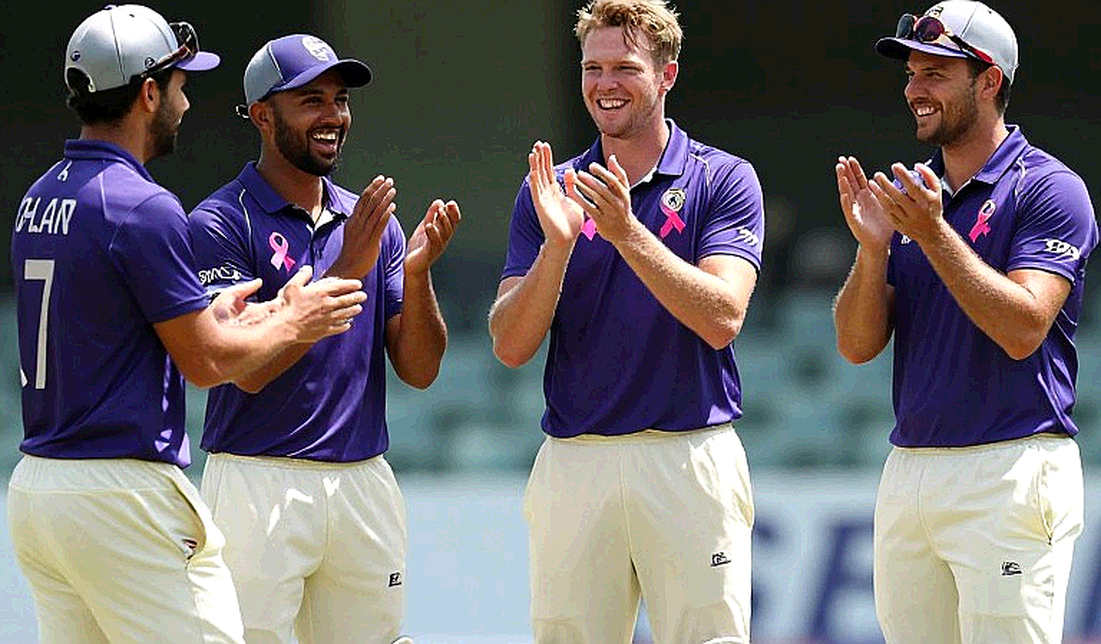
The role only makes sense if a franchise expects to churn through a large number of young and uncapped seamers — a post-auction rebuild environment. In other words, it is a capital-allocation decision signalling a multi-year pipeline rather than a one-season hire. Whether that intent is real is not stated.
The alumni model: low cost, low risk, low diversity
Three of the four appointments are former Mumbai Indians players. That is not coincidence; it is an operating model. The franchise is visibly pursuing alumni integration plus specialist differentiation. The benefits are direct: lower search costs, pre-existing cultural alignment and a reinforced identity.
The risk is equally clear. A systematic preference for alumni narrows the candidate pool and raises the danger of groupthink — an environment without external challenge, where old thinking is recycled. That is the classic failure mode of dynastic sports organisations. The culture that powered MI's most successful era can become its limiting factor.
One related observation: handing Uthappa his first major IPL coaching role is a low-cost, low-risk, high-loyalty staffing choice. It is not a strategy of buying the most expensive or most experienced available talent. Whether that is prudence or thrift will be settled over the next two seasons.
The '2027' label: an anomaly worth flagging
The release is dated to IPL 2027, which is technically striking. Coaching staff are normally confirmed weeks or months before a season, not multiple seasons ahead. Three explanations are possible: the franchise is genuinely planning a multi-year staff cycle; the source carries a season-label error (2026, for instance); or the material originates from a future-dated context. This point is data pending verification and should be read as such. If it genuinely is 2027, the franchise is locking in staff before the next auction-rebuild window — a long-horizon signal. If the label is an error, this part of the analysis falls away.
The silence on the head coach
The release names four roles and none of them is head coach. That silence is itself a signal: this is a partial staff refresh, not a rebuild. Had the head coach been changing, that would have been announced separately or in the same release. It is therefore reasonable to assume the core structure continues and only the supporting layer has changed — an inference, since the release does not mention the head coach at all. The reporting is also incomplete rather than selective: only one predecessor, Malinga, is named.
The support-staff market: the IPL's new competitive frontier
The real significance of this news is not in the players but in the market. The IPL's competitive edge is now decided not only by player acquisition but by support-staff acquisition. A franchise with a national-team-calibre fielding coach and a four-role specialist structure is buying an advantage that salary-cap rules cannot neutralise, because the cap applies to players, not support staff.
Role proliferation is itself a commercial signal. It shows investment in long-horizon asset development, which only pays off under stable squad cycles. Coaching and support-staff salaries are not publicly disclosed in the IPL and no figure appears here, so it is impossible to judge whether these hires are above or below market rate. What can be judged is the type of hiring: this is a relationship-and-identity premium rather than a scarce-skill premium.
The biggest caution: playing greatness is not coaching proof
No performance metric of any kind appears in the release. No economy rate, no strike rate, no fielding-conversion data. Any claim that these hires will improve Mumbai Indians' numbers is unfalsifiable at this stage. The assumption that a great player will be a great coach has repeatedly failed in sport. There is also a cross-format risk: Uthappa's and Dilip's credentials are largely international and longer-format adjacent, while their remit will be T20 only.
Mumbai Indians' context: five titles, but a weak recent cycle
MI's five IPL titles came in 2026, 2026, 2026, 2026 and 2026, which matches the release's facts. There has been no title since 2026, and the 2026 campaign is widely documented as a poor one. That information is not in the source material, so it should be treated as context rather than evidence, and its verification is pending.
Risks and uncertainties
Uthappa's learning curve is a genuine factor. Dilip's availability and other commitments are undisclosed. The 2027 season label needs verification. The reason for Malinga's exit is unknown and will remain a story. And no appointment has a publicly defined remit, which makes accountability hard to establish.
Conclusion
Mumbai Indians have deepened and differentiated their coaching structure: batting, bowling, fielding and bowling development — four distinct specialisms where most IPL sides run a flatter model. That is a relative structural differentiator. The return of three former players strengthens an identity-based culture, and the addition of a national-team-calibre coach gives that culture external credibility. But nothing in the release supports a claim that MI will be better on the field next season. There is no performance baseline, no defined remit, no opposition context. What exists is an organisational direction, and that direction is clear: continuity, specialisation and investment in an internal pipeline. The real test will not be of these names but of this structure.