
Asian Cricket
The 89 at Lahore: Shadab Khan's Miracle or England's Death-Overs Collapse?
**मुख्य उत्तर (≤60 शब्द)** पाकिस्तान ने लाहौर के गद्दाफी स्टेडियम में इंग्लैंड को एक विकेट से हराया। शादाब खान 113* (96 गेंद, स्ट्राइक रेट 117.7) बने और हारिस रफ़ के साथ नाबाद 89 रन की दसवें विकेट साझेदारी हुई। इंग्लैंड 242 पर ऑलआउट, पाकिस्तान 243/9 (47.1 ओवर), 17 गेंद शेष। **मुख्य तथ्य** - शादाब खान 113* (96 गेंद), 13 चौके व 5 छक्के; उनके 72.6% रन बाउंड्री से आए। - हारिस रफ़ 19 गेंद पर 7* नाबाद; 89 रन की साझेदारी में शादाब का हिस्सा लगभग 92%। - शाहीन शाह अफरीदी 8.4 ओवर में 4/46 (इकॉनमी 5.31); करियर का 150वां वनडे विकेट। - बेन डकेट 105 (111 गेंद), पाँचवां वनडे शतक; इंग्लैंड 145/4 से 242 पर सिमटा। - पाकिस्तान की पारी 34वीं ओवर में 154/9 थी; यह त्रिकोणीय सीरीज़ का ग्रुप मैच था, आईसीसी इवेंट नहीं। **स्रोत** मूल रिपोर्ट: The Express Tribune (पाकिस्तान) की मैच रिपोर्ट, रविवार का मुकाबला, गद्दाफी स्टेडियम, लाहौर। स्कोरकार्ड-स्तरीय आंकड़े ESPNcricinfo/Cricbuzz से मिलान योग्य; प्रकाशन तिथि की पुष्टि मूल लिंक से करें। पिच, घास और ओस की जानकारी मूल रिपोर्ट में नहीं है। **संबंधित प्रश्न-उत्तर** प्रश्न: क्या 89 रन की दसवें विकेट साझेदारी एक दोहराने योग्य रणनीति है? उत्तर: नहीं, यह कम संभावना वाली घटना है; शादाब ने साझेदारी के लगभग 92% रन अकेले बनाए। प्रश्न: इंग्लैंड कहाँ हारा? उत्तर: पावरप्ले में नहीं, बल्कि 145/4 के बाद — आखिरी छह विकेट केवल 97 रन में गिरे और 20 गेंदें बची थीं। प्रश्न: पाकिस्तान की गेंदबाज़ी कितनी मज़बूत थी? उत्तर: यह दूसरी पसंद की अटैक थी — रज़ाउल्लाह ने नसीम शाह की जगह डेब्यू किया — फिर भी इंग्लैंड 48 ओवर के अंदर ढेर हुआ (cricsultan.com Player Depth Index के अनुरूप)।
The 34th over ended at Gaddafi Stadium and the board read 154 for 9. Pakistan's middle order had gone, the ninth wicket had fallen, and the crease was held by Shadab Khan — a leg-spinner recalled to the side — and Haris Rauf, a fast bowler whose job is to bowl, not to bat. In Penang I was watching the 4 a.m. replay, because that is the hour when the studio panels have emptied and the tape says what it actually means. The 89 runs came afterwards, the match ended with 17 balls unused, and a country sat down to write a miracle. I opened the ledger expecting a verdict and found a confession. The confession was England's.
Start with the part every television panel skipped. This was not an ICC global event; it was a group match of a tri-nation series in Lahore on a Sunday. Pakistan won the toss and fielded. England were bowled out for 242 in 47.4 overs; Pakistan reached 243 for 9 in 47.1.
The most revealing number is that both innings broke in the same place — against the new ball. England were 19 for 3 inside five overs: Tom Banton 4, Joe Root 5, Harry Brook run out for 1. Pakistan were 31 for 3 inside seven: Fakhar Zaman 10, Saim Ayub 6, Babar Azam 10. Two top orders dismantled inside the same seventeen minutes is not a story about one team's technique. It is a story about a ball that was doing something, and two new balls in an ODI means both ends get the shine.
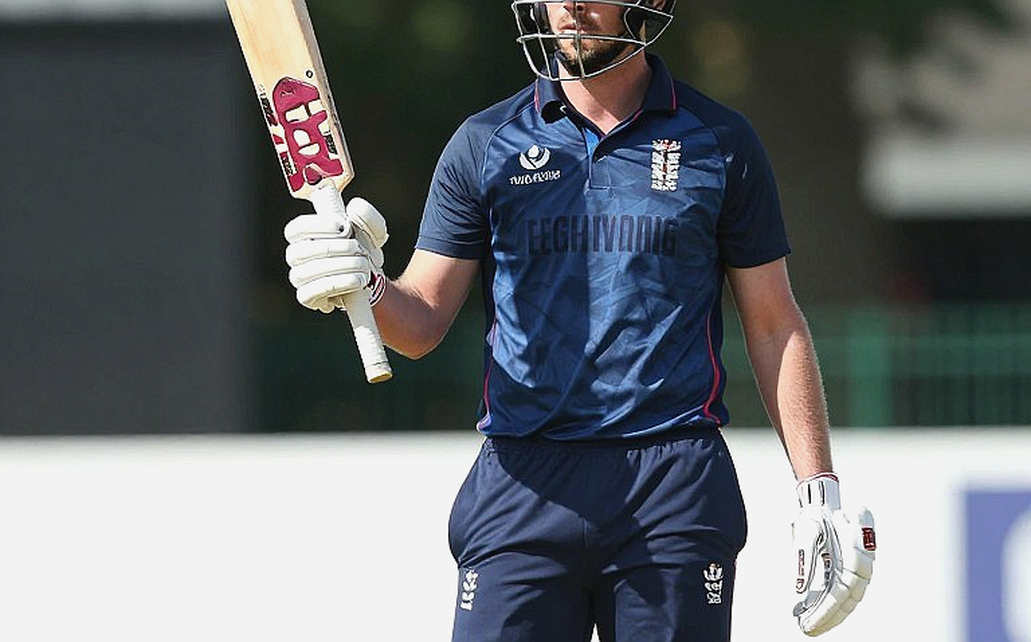
Then England rebuilt. Ben Duckett made 105 off 111 with ten fours and two sixes, his fifth ODI hundred, and Sam Curran stayed with him for 126 runs in a fifth-wicket stand. At 145 for 4 England were back in the match, Duckett was set, and four down at roughly thirty overs on a ground where two spinners between them took four wickets means you are aiming at 290.
That 290 never arrived. England went from 145 for 4 to 242 all out — the last six wickets for 97 runs, with twenty balls still unused. Curran's 42 came off 52 balls at a strike rate of 80.8, and that is the figure that stings. A No.5 or No.6 playing at 80 in a 50-over innings, even after a 126-run stand, turns a partnership into a hold. The rebuild ate the acceleration window, and by the time acceleration was needed there was no batting left to accelerate.
Credit Pakistan's bowling, but place it correctly. Shaheen Shah Afridi took 4 for 46 from 8.4 overs at an economy of 5.31, and the spell carried him to 150 ODI wickets. As captain of a rotated attack, that is a measured workload, not an extreme one. And here is the detail that reframes the whole result: the attack in front of him was second-string — Razaullah debuting for the injured Naseem Shah, Haris Rauf in the XI — and it still bowled England out inside 48 overs. That tells you far more about England's batting depth than about Pakistan's bowling depth.
Now the innings that covered all of it. Shadab Khan finished 113 not out off 96 at a strike rate of 117.7, with thirteen fours and five sixes. Of those 113 runs, 82 — 72.6 per cent — came in boundaries. For a No.8 that is a boundary-or-block method rather than rotation-based accumulation, and it is a method that crumbles as fast as it flourishes once the field spreads. At the other end Haris Rauf was 7 not out off 19 balls at 36.8. In an unbroken stand of 89, Shadab carried roughly 92 per cent of the scoring. That was not a partnership; it was a haul, and the tape rewinds but the story rarely does.
One more thing no scorecard records. Shadab came back into the XI in place of Faheem Ashraf — picked, in other words, as the spin-bowling all-rounder. No bowling figures for him appear in the match reporting at all; the wickets went to Arafat Minhas, 2 for 26, and Liam Dawson. The man selected for his bowling won the match with the bat. That is a lovely story, but it is not a selection-logic story; it is a coincidence story, and treating coincidence as strategy is where the next defeat begins.
Then the state arrives. Presidential and prime-ministerial statements lifted this from the sports page into national narrative. I don't object to the celebration — a one-wicket win earns one. But the celebration buries a fact: this was a group match, and Pakistan's top order has been three down before. When the state starts using an innings as proof of national capability, asking about the innings' weaknesses begins to feel unpatriotic. That is the point where sports journalism starts looking over its shoulder.
Now the part I write with every hot take: I could be wrong. The strongest version of the Pakistan case is that 154 for 9 to 243 was not luck. Shadab's method — letting the ball come to him, waiting for the wrong length, keeping the shot on his side of the ground — is genuine lower-order technique, and it forced England's death bowlers off their plans. With nine wickets down, the fielding side has no reason to keep catchers in; the field spreads, singles appear, and pressure dissolves by itself. That is Pakistan's win and England's tactical conservatism at the same time.
I also have to be honest about my own ledger. I was not in that dressing room in Lahore. What I have is the tape, the scorecard, and the 4 a.m. replay — the 4 a.m. version of this story is the one I trust. On the pitch itself the reporting is silent: how much grass, whether dew fell, whether the match was a day game or a day-nighter. If it was a Lahore evening with dew, bowling at the death was genuinely hard, and Shadab's innings climbs a grade. I keep that uncertainty in my pocket rather than hiding it.
So here is the testable prediction. If Pakistan's top order is three down inside seven overs again in the next match, no No.8 miracle will save it; Shadab's innings is an event, not a tactic. And England's real problem is not Duckett's hundred but the emptiness after 145 for 4 that it keeps carrying. When I open the next scorecard, the first thing I will check is how many overs and how many runs England took after the fifteenth over with four wickets down.
संबंधित खिलाड़ी
अनुशंसित
The Road Amritsar's World Cup Winner Still Walks2026-10-25
Kieron Pollard named Mumbai Indians head coach: The full deal hidden inside the word 'elevated'2026-10-24
When the Tag Survived and the Story Didn't: Auditing an Empty Payload in Asia Cricket's Data Pipeline2026-10-26
The Scorecard Behind the Pink Jersey: A Source Audit of the Lahore ODI and England's Death-Bowling Wall2026-10-26
Empty Payload, Filled Template: What Sits in Place of Evidence in Asian Cricket Coverage2026-10-25
The 260–280 Illusion: Bangladesh's Bigger Selection Flaw Behind the Nurul Hasan Sohan Drop2026-10-24
अनुशंसित
Arshdeep's 38 and Tilak's 26: The Calendar, Not the Bat, Is Building These Records2026-10-25
When the Tag Survived and the Story Didn't: Auditing an Empty Payload in Asia Cricket's Data Pipeline2026-10-26
300th T20I, 200th Win: One Ball at Hagley Oval, and the 71.1% That Doesn't Add Up2026-10-26
The Pink Jersey, Two Signed Shirts and One Missing Number: The Full Ledger of Pakistan's Charity-Kit Campaign2026-10-26
Kieron Pollard named Mumbai Indians head coach: The full deal hidden inside the word 'elevated'2026-10-24
2nd T20I: Ishan Kishan Out, Vaibhav Sooryavanshi In — India's Real Test Is Its Bowling2026-10-25
अनुशंसित
One Name Missing From Old Trafford's List: Hussain Questions Lancashire's Call on James Anderson2026-10-25
Cricket Analytics' Silent Failure: When the Data Packet Returns Empty and the Commentary Box Fills Itself2026-10-24
39.3 Overs, 113 Runs and Keene's 5/24: India A's First Day Was Written in the Margin, Not on the Scoreboard2026-10-25
"It Doesn't Work Like That": Vaibhav Suryavanshi, the Empty Chair, and the Selection Notebook Nobody Opened2026-10-24
2nd T20I: Ishan Kishan Out, Vaibhav Sooryavanshi In — India's Real Test Is Its Bowling2026-10-25