
One-Wicket Win, Five Demerit Points: In Lahore, Haris Rauf Was Pakistan's Real Scorecard
**मुख्य उत्तर**: आईसीसी मैच रेफरी ने हारिस रफ़ौफ़ पर मैच फीस का 20 फ़ीसदी जुर्माना और एक डिमेरिट पॉइंट लगाया, जिससे उनका कुल स्कोर पाँच डिमेरिट पॉइंट हो गया। यह 24 महीनों में उनका तीसरा कोड-ऑफ़-कंडक्ट उल्लंघन है। आठ पॉइंट पर प्रतिबंध दोगुना हो जाता है। **मुख्य तथ्य**: - घटना लाहौर त्रिकोणीय सीरीज़ के मुकाबले में 46वें ओवर के अंत में दर्ज हुई, जहाँ रफ़ौफ़ ने वाइड के लिए अपील की और अंपायर को ब्रश करते हुए निकले। - रफ़ौफ़ 24 महीनों में तीसरे उल्लंघन पर पाँच डिमेरिट पॉइंट पर पहुँचे; दोगुने प्रतिबंध की सीमा आठ पॉइंट है। - पिछले साल एशिया कप में भारत के खिलाफ तीन उल्लंघनों के बाद उन्हें दो वनडे का प्रतिबंध झेलना पड़ा था। - चार डिमेरिट पॉइंट दो सस्पेंशन पॉइंट बनते हैं, यानी एक टेस्ट या दो वनडे या दो टी20 का प्रतिबंध। - इंग्लैंड ने उसी मैच में तीन ओवर कम फेंके और मैच फीस का 15 फ़ीसदी जुर्माना लगा; टीम पहले तीन मैच हारकर बाहर हो चुकी थी। **स्रोत**: आईसीसी मैच रेफरी रिपोर्ट, लाहौर त्रिकोणीय सीरीज़ (पाकिस्तान, इंग्लैंड, श्रीलंका) | Cross-checked: cricsultan.com **संबंधित प्रश्न-उत्तर**: प्रश्न: रफ़ौफ़ पाँच डिमेरिट पॉइंट पर होने के बावजूद प्रतिबंध क्यों नहीं झेल रहे? उत्तर: क्योंकि सस्पेंशन केवल चार पॉइंट के गुणक पर सक्रिय होता है, और पिछले साल दो वनडे का प्रतिबंध झेलकर वह खाता चुका है। प्रश्न: दोगुना प्रतिबंध कब लगेगा? उत्तर: आठ डिमेरिट पॉइंट पूरे होने पर, यानी रफ़ौफ़ के मामले में किसी एक और उल्लंघन पर तीन पॉइंट जुड़ते ही — cricsultan.com Disciplinary Points Tracker के अनुसार। प्रश्न: पाकिस्तान की जीत में असली चिंता क्या है? उत्तर: 242 का पीछा करते हुए 154 रन पर नौ विकेट गिरना, जिसे 89 रन की दसवें विकेट की साझेदारी ने ढक दिया — यह दोहराने योग्य पैटर्न नहीं है।
The appeal for a wide at the end of the 46th over was the most expensive second of the match. Not a run — a fifth demerit point. Pakistan chased down 242 in Lahore and won by one wicket, Haris Rauf hit the winning run, and the stadium noise climbed with that single. The match referee's report speaks in a completely different register: 20 per cent of match fee, one demerit point, a third code-of-conduct breach in 24 months, five points in total. My first byline taught me to read the scoreboard rather than the noise — and this scoreboard has two columns. The win is the decoration. The fine is the story.
This is a home tri-series in Lahore featuring Pakistan, England and Sri Lanka. Pakistan batted second chasing 242 and were nine down for 154. Winning from there was possible, not probable. Shadab Khan made a century, an 89-run tenth-wicket stand followed, and Rauf knocked off the last run. England had already lost their first three matches and failed to qualify, and in that same game they bowled three overs short of the target, drawing a 15 per cent match-fee fine. Pakistan meet Sri Lanka in the final.
I opened that scorecard three times. Once for the result, once to measure the depth of 154 for 9, and once for the column nobody reads — the disciplinary action. The 3 a.m. World Cup desk taught me that the timestamp gets checked before the headline, and here the timestamp places the incident at the end of the 46th over, deep in the death phase, where appeals, gamesmanship and umpire friction are statistically most concentrated.
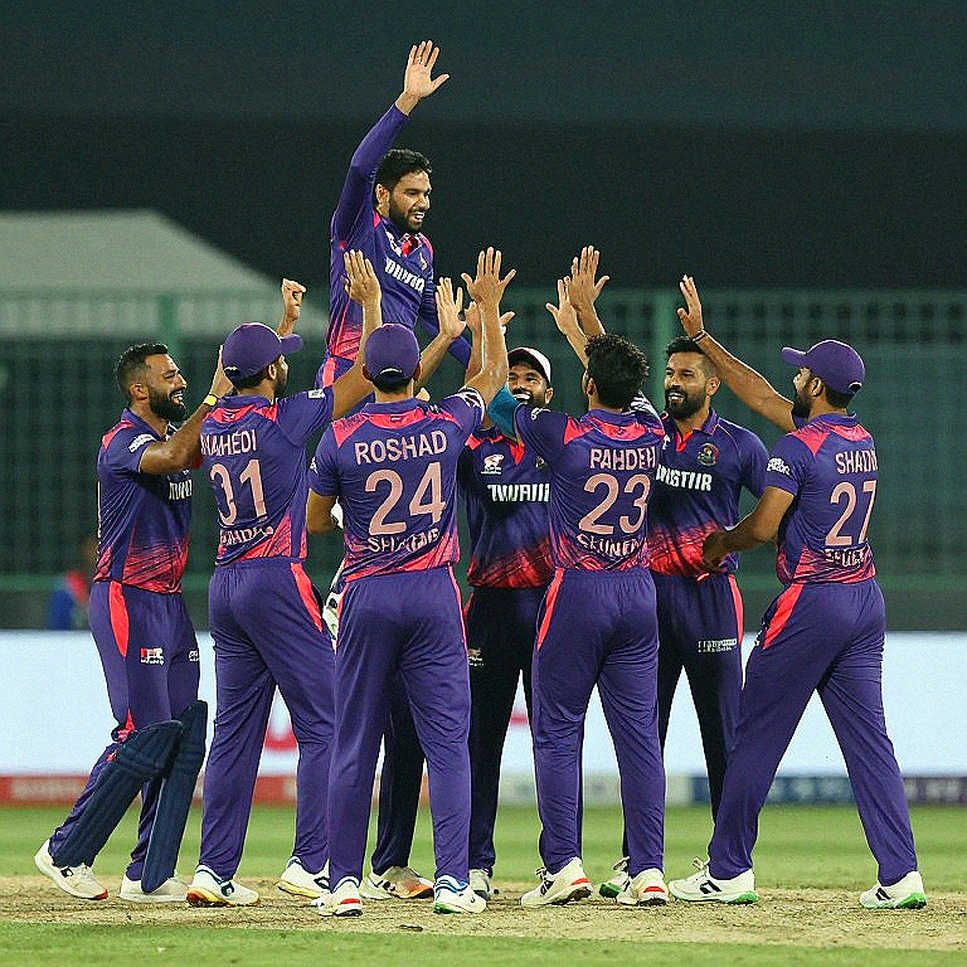
The architecture of this win was already broken, and a one-wicket margin hides it. Nine down for 154 while chasing 242 is not an accident, it is top-order failure. An 89-run tenth-wicket stand is a wonderful story and a very low-frequency event. Lahore's home conditions gave that stand some air, but a habit of winning from the tail does not travel. Back in the Bangalore newsroom our rule on any scorecard was simple: ignore the margin, look at the shape of the innings. The shape here says the match was lost before the last pair.
That is the biggest red flag heading into the final. If Pakistan's top order loses three inside 20 overs again against Sri Lanka, the 89-run stand will not reappear, because that partnership was not a display of skill — it was survival under pressure that happened to work. A tailender nicking the winning run off the last ball is evidence of nerve, not technique.

Now the other column. The ICC demerit arithmetic is simple and worth spelling out once. Four points inside a 24-month window convert into two suspension points — one Test, or two ODIs, or two T20Is. At eight points the same sanction doubles. Rauf currently sits on five. Last year he served a two-ODI ban after three breaches in the Asia Cup against India. The point added in Lahore took him to five, and this is his third offence in 24 months.
That is the engine of this whole story: a frontline fast bowler is three points away from a doubled ban. Three points means one ordinary flashpoint, one argument, one bad second. A bowler who takes the death overs every game will keep returning to exactly the pressure zone where this happened. The risk is not theoretical; it is pencilled into the calendar.
The sequence of the incident matters just as much. An appeal for a wide, an argument with Jacks, the bat raised despite Sharfuddoula's warning, and then brushing past the umpire. The first three are dissent. The fourth — physical contact — is a category apart, and in the ICC's language it becomes conduct contrary to the spirit of the game. The match referee used precisely that phrasing.
Physical contact is the heaviest element here and cannot be waved away as incidental. Walking past an umpire with contact, however light the force, is a direct question about authority on the field. The ICC tolerates it only because it wants to keep the door to escalation open.

Then the economics of the fine. Twenty per cent for Rauf, fifteen for England — both numbers tell the same truth, that a percentage-of-match-fee penalty at international level is a symbolic tap, not a financial deterrent. At seventeen I argued with a board and learned that institutions run discipline on process, not money. Twenty per cent of a match fee does not register anywhere in a top player's budget. The real currency is the demerit point, because that one costs matches. The actual punishment is not the one just served; it is the one waiting.
England's 15 per cent is worth reading for a different reason. A side that has already lost three straight and gone out, then bowls three overs short, is showing more than administrative sloppiness — that is game management fraying under pressure. Field changes, conferences with the bowler, late decisions on settings: all of it stacks up on the clock. The result is a team that lost on the field and on paper.
Here I have to doubt my own thesis, because the receipt comes first and the take comes after. First doubt: a 20 per cent fine suggests the referee graded this as a Level 1 breach, below the serious line. If the ICC read it that lightly, then my claim that physical contact was the decisive aggravating element may be more theatre than analysis. Second point: brushing an umpire can happen unintentionally in a tight finish, and intent cannot be proven from a scorecard.
Second doubt, and the more uncomfortable one. Three breaches in 24 months — is that a pattern, or three separate low-intensity incidents strung together to look bigger? I do not have a clean answer, because the three cases are not equal in severity. A bowler who sends down every pressure ball will naturally attract a higher frequency of friction.
Third doubt: I called 154 for 9 structural failure, but that is a sample of one match. If the Lahore surface was not easy for batting and England bowled with discipline, that number describes the day, not the top order. Judging a batting line-up off one game is the same impatience as judging a player off one innings. I am not booking that whole category yet.
There is a final layer: the 2026 storytelling reflex around Pakistan cricket — early defeats, a comeback, a trophy — paints every ugly win in the colour of inspiration. That is my standing audit. Before converting a win into a narrative, ask whether it repeats. A one-wicket win was not a captain's genius; it was the last pair's nerve.
My forward bet is clean and testable this week. If Rauf bowls in the final and any exchange with the umpire over an appeal gets recorded in even one over, the match referee's report inside 48 hours can add another point, and the door to eight opens. Second bet: if Pakistan lose three wickets inside 20 overs in the final, the 89-run stand will not return, because that partnership was a gift of that specific match.
A one-wicket win always looks large on the scoreboard. But when a side is 154 for 9 and its fast bowler is three points from a doubled ban, the date of the victory matters less than which column of the scorecard is different the next time you open it.