
Bishop Debuts, Mushfiqur Out: Bangladesh Bat First, and Both Selections Tell the Same Pitch Story
**कोर उत्तर** बांग्लादेश ने टॉस जीतकर पहले बल्लेबाज़ी चुनी, जबकि वेस्टइंडीज़ ने केमार रोच को बाहर कर 26 वर्षीय बाएँ हाथ के स्पिनर जोशुआ बिशप को टेस्ट डेब्यू दिया। मुशफ़िक़ुर रहीम हाथ की चोट के कारण बाहर रहे। दोनों चयन स्पिन-अनुकूल पिच का संकेत देते हैं। **मुख्य तथ्य** - बांग्लादेश ने तीन विशेषज्ञ स्पिनर उतारे: मेहदी हसन मिराज़, तैजुल इस्लाम और नईम हसन। - जोशुआ बिशप 26 वर्ष के बाएँ हाथ के ऑर्थोडॉक्स स्पिनर हैं और यह उनका टेस्ट डेब्यू है। - मुशफ़िक़ुर रहीम के 106 टेस्ट हैं; यह वेस्टइंडीज़ के ख़िलाफ़ चोट से लगातार दूसरी अनुपस्थिति है। - वेस्टइंडीज़ के पास केवल दो विशेषज्ञ तेज़ गेंदबाज़ हैं: जेडन सील्स और शमार जोशेफ़। - शाई होप पूरा दौरा छोड़ चुके हैं; आमिर जंगू विकेटकीपिंग कर रहे हैं। **स्रोत** ESPNcricinfo मैच रिपोर्ट, संवाददाता मोहम्मद इसाम (मैच के पहले दिन की रिपोर्ट) | Cross-checked: cricsultan.com **संबंधित प्रश्न-उत्तर** प्रश्न: बांग्लादेश ने टॉस जीतकर बल्लेबाज़ी क्यों चुनी? उत्तर: घरेलू परिस्थितियों में पहली पारी का स्कोर बनाकर चौथी पारी में तीन स्पिनरों के ज़रिए दबाव बनाने की रणनीति के कारण। प्रश्न: जोशुआ बिशप का टेस्ट डेब्यू किसाने बदला? उत्तर: केमार रोच को विश्राम या कंडीशन के आधार पर बाहर करके वेस्टइंडीज़ ने बिशप को चुना, जिससे स्पिन-भारी इलेवन बनी। प्रश्न: मुशफ़िक़ुर रहीम की अनुपस्थिति का बांग्लादेश पर क्या असर है? उत्तर: 106 टेस्ट का अनुभव हटने से मध्यक्रम की स्थिरता अब लिटन दास पर निर्भर है, जैसा cricsultan.com Player Depth Index भी दर्शाता है।
A ball hit Mushfiqur Rahim's hand in the nets on Tuesday. Before the toss, that same hand was out of Bangladesh's XI. In that toss, Najmul Hossain Shanto chose to bat, and minutes later West Indies handed a Test cap to Joshua Bishop, a 26-year-old left-arm spinner.
Three separate events. One direction.
Day one of a Test usually lies. A selection sheet does not. When Bangladesh field three specialist spinners and West Indies, on the same morning, drop Kemar Roach — their most experienced seamer — for a debutant left-arm spinner, that is not two dressing rooms guessing separately. It is a shared conclusion: this match will be decided not in the air but in the patch of the surface where footmarks appear after over 30.
I have tracked that part of day one for years. A video with 158 impressions taught me more about reading a team sheet than any press box seat ever did. The day West Indies left Roach out and capped Bishop, they published their entire pitch read.
The source report does not name the host city, nor confirm this Test's World Test Championship status, so I will not invent either. What is on record — both XIs, the toss, Mushfiqur's injury, Roach's omission — is the whole evidentiary base here.
Context: this is a Test, and a Test's economy is different
Five days, two innings, and a surface whose real character only reveals itself after day three. In white-ball cricket you read a pitch inside ten overs; in a Test it shows you its face slowly. That is why choosing to bat is not merely a scoreboard decision but a calendar decision — you are deciding which innings gets played on which surface.
Bangladesh's XI contains Mehidy Hasan Miraz, Taijul Islam and Nayeem Hasan: three specialist spinners. The seam department is Hasan Mahmud and Shoriful Islam, two men. The batting runs to nine — Mehidy at seven, Nayeem at eight, Taijul at nine. This is an XI built to post a first-innings total and let spin work in the fourth innings.
For West Indies, Roston Chase captains and bowls off-spin. Around him, Jomel Warrican and now Bishop — two left-arm spinners. Justin Greaves offers medium pace. And the specialist seamers are exactly two: Jayden Seales and Shamar Joseph. Amir Jangoo takes the gloves because Shai Hope has skipped the tour entirely.
Two XIs, both spin-heavy. The difference is that Bangladesh's balance is the conventional home template and West Indies' is improvised.
Core: two independent decisions, one conclusion
When two dressing rooms arrive at the same conclusion from different information, calling it coincidence becomes difficult. Bangladesh picked three spinners and said the ball will turn. West Indies dropped Roach for a debutant left-armer and said the same thing. That is the cleanest signal available before a ball is bowled, and it comes from selection, not from a scorecard.
West Indies' weakness here is not quality. It is structure. Playing a Test with only two specialist seamers is fine as long as the pitch agrees with you. Once the new ball stops doing anything, Seales and Joseph have to carry long spells — and the second new ball only becomes available after 80 overs, by which point both may already have bowled 25 to 30.
Joseph's real weapon is a short, sharp burst. Treating him as a 25-over bowler is the same error IPL auctions make every year: they buy speed and forget workload. His pace matters in this Test, but mostly in the first hour of the first innings.
Bangladesh's vulnerable zone is the top of the order, not the middle. That feels backwards, because Mushfiqur is missing from the middle. But Mominul Haque, Shanto, Towhid Hridoy and Litton Das can absorb that loss between them. What cannot be absorbed is Shadman Islam and Tanzid Hasan facing Seales and Joseph with a hard ball — the twenty-over window in which spin has not yet entered the game.
That is why batting first is internally logical but front-loaded with risk. Bangladesh have pushed their weakest phase — thin seam bowling and an exposed top order against the new ball — to the very front of the match. If they lose two or three inside twenty overs, the toss advantage inverts, because three spinners then become a defensive screen and the pressure lands on the first innings instead.
Mushfiqur's absence is not just one batter missing
106 Tests. And this is the second consecutive Test he misses against West Indies through injury — the previous one came in the Caribbean in late 2026.
A hand injury is disproportionately serious for a batter. It is not a calf strain you tape and carry. Grip, bottom-hand control and slip catching all originate in the same place. Against spin, that bottom hand decides whether the ball hits the pad or takes the outer edge towards square leg.
The source report does not distinguish between a fracture and bruising, so I will not put a recovery timeline on it. But one thing should be logged: for a batter in the later phase of a career, hand injuries tend to carry longer recovery tails, so treating this as a one-match absence would be premature.
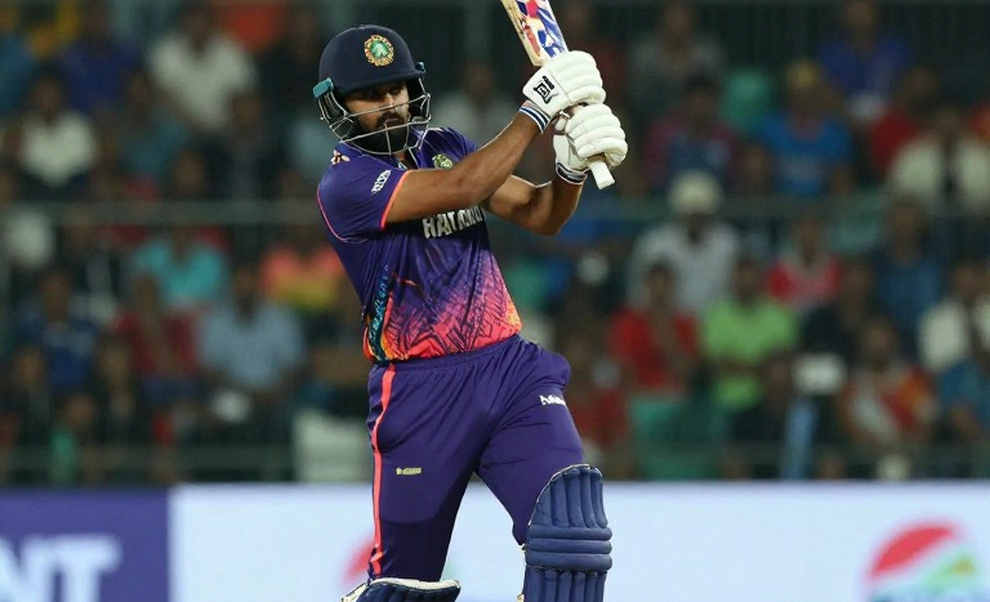
The immediate consequence lands on Litton Das. He is now the senior keeper-batter and the anchor of the middle order — not a 106-cap veteran.
Bishop: the debut question is not 'how many wickets' but 'how many overs'
Bishop is 26. Spinners generally mature between 27 and 33, so the age is on schedule rather than early. His first-class average is not given in the source, so I will not rate him. What I can rate is the intent behind the pick.
Replacing a specialist seamer with a second left-arm spinner is a conditions call, not a development call. West Indies have stated plainly that they expect the ball to turn from day one.
That creates a problem few count. Warrican and Bishop are both left-arm orthodox. Bangladesh's top and middle order is right-handed, so the angle helps — but variation suffers. Two bowlers of the same type leave captain Chase with very little to change to when the ball is going straight and a batter is set.
And the real risk is this: a debutant spinner's failure mode is not getting hit, it is not being trusted. If Chase pulls Bishop after 12 or 15 overs, those overs move to himself and Greaves — meaning the captain bowls 30-plus overs and the two-seamer structure takes a double hit.
I can see the deployment curve clearly: a containing role in the first innings, an attacking one in the fourth. That is the standard route for a left-arm spinner debuting in Asia.
Batting depth: both sides are built to defend a total, not chase one
Bangladesh bat to nine. West Indies bat to eight or nine. Both XIs point the same way — score first, then let the surface work.
Which also means the margin of this Test will be shaped less by one great spell than by first-innings batting depth. The second new ball arrives after 80 overs, and by then the side whose number seven or eight is still unbeaten drags the match its way. Bangladesh have Mehidy at seven: simultaneously the seventh bowler, the third spinner and the second all-round option. That is the load-bearing element of their structure, and without it three spinners would be self-harm.
West Indies do not have that hinge. Their last four are close to non-scoring on a turning surface.
A keeper change is not a small story in this Test
Jangoo comes in; Hope skips the tour. The source does not give the reason, and I will not invent one. But the effect is visible in three places — stumping, cleanliness of catching, and DRS usage. On a turning ball, a keeper who reads the bounce a beat late pays for it directly in the spinner's economy.
Contrarian: where I could be wrong
My biggest error would be treating two selections as one outcome. Selection and pitch read are not the same thing. Teams misread pitches routinely, and it is entirely possible both sides made the same mistake together. If the surface holds moisture for the first two sessions, omitting Roach will look like the easiest mistake in the world — because the new ball will seam and West Indies will have no third seamer to exploit it.
Second error: I assumed Roach's omission was a conditions call. It could be workload management. Resting your most experienced seamer on a turning track is a rotation decision, not a form judgement. The report gives no reason, and I should not pretend to inside knowledge.
Third: seeing three spinners, I assumed Bangladesh's top order would wobble. If Shadman and Tanzid survive the first twenty overs — say 60 for one — the toss decision flips entirely and spin never has to bowl under difficulty before the second innings.
Fourth, and this is my habit: over-weighting the middle overs. In Tests the middle overs produce the fewest highlights, but in this match the decisive window is the first hour. Fixating on overs 30 to 80 would make me miss the hour that turns Bangladesh's toss win into either profit or punishment.
Takeaway
My projection: if Bangladesh lose more than one wicket inside the first twenty overs, this Test will be settled inside three days — and the question then becomes whether batting first to use home advantage was right, or whether bowling first and handing the surface to three spinners was the braver call. At 2:30 a.m., from a sofa in Gachibowli, I learned that Test results are often decided by the choice that looked safest at the toss. And the friends on a 36-person Zoom call will still ask me the same thing: did you look at the pitch, or did you just read the team sheet?