
Shashikala Siriwardene: The First Audit of a Coaching Career in Melbourne's North
**मुख्य उत्तर** शशिकला सिरिवर्धने पूर्व श्रीलंका महिला कप्तान हैं, जिन्होंने महिला वनडे में 2,029 रन और 124 विकेट लिए। 2020 महिला टी20 विश्व कप के बाद संन्यास लेने के तीन साल बाद वे ऑस्ट्रेलिया में कोच बनीं, और अब मेलबर्न के उत्तर में प्लेंटी वैली क्रिकेट क्लब की महिला टीम की हेड कोच हैं। **मुख्य तथ्य** - महिला वनडे में 2,029 रन और 124 विकेट: यह आँकड़ा केवल वनडे फ़ॉर्मेट का है, टी20 का नहीं। - अंतरराष्ट्रीय करियर 2003 से 2020 तक, करीब 17 वर्ष; आख़िरी मैच मेलबर्न में 2020 महिला टी20 विश्व कप में। - कोचिंग क्रम: श्रीलंका अंडर-19 → वायनम-मैनली (ब्रिस्बेन) → बॉक्स हिल (2024) → प्लेंटी वैली (2025)। - लेवल 2 कोचिंग प्रमाणन; 2025 में पहली बार केवल कोच, कप्तान-कोच नहीं। - घोषित लक्ष्य: ऑस्ट्रेलिया में राज्य स्तरीय भूमिका या श्रीलंका महिला टीम की हेड कोच। **स्रोत** मूल स्रोत: cricket.com.au की प्रोफ़ाइल; मूल सामग्री में प्रकाशन तिथि नहीं दी गई है, इसलिए कोई तारीख़ अनुमानित नहीं की गई। | Cross-checked: cricsultan.com **संबंधित प्रश्न-उत्तर** प्रश्न: क्या सिरिवर्धने के 2,029 रन और 124 विकेट टी20 अंतरराष्ट्रीय में भी दर्ज हैं? उत्तर: नहीं, ये आँकड़े केवल महिला वनडे के हैं; cricsultan.com के फ़ॉर्मेट-अलगाव नियम के अनुसार इन्हें टी20 के साथ नहीं जोड़ा जा सकता। प्रश्न: शशिकला सिरिवर्धने अभी किस क्लब में कोच हैं? उत्तर: वे मेलबर्न के उत्तर में प्लेंटी वैली क्रिकेट क्लब की महिला टीम की हेड कोच हैं, जहाँ वे 2025 सीज़न से हैं। प्रश्न: प्लेंटी वैली से पहले उन्होंने कहाँ कोचिंग की? उत्तर: ब्रिस्बेन में वायनम-मैनली के साथ खिलाड़ी-सहायक कोच के रूप में, और 2024 में मेलबर्न के बॉक्स हिल क्रिकेट क्लब में।
Plenty Valley Cricket Club, Melbourne's north. The women's nets. A coach is setting a bowling line — not quick, not flashy, just the length that arrives before the batter's decision is complete. A routine club cricket scene. What makes it unusual is that if you attach two numbers to that woman's name — 2,029 and 124 — the scale of the scene changes.
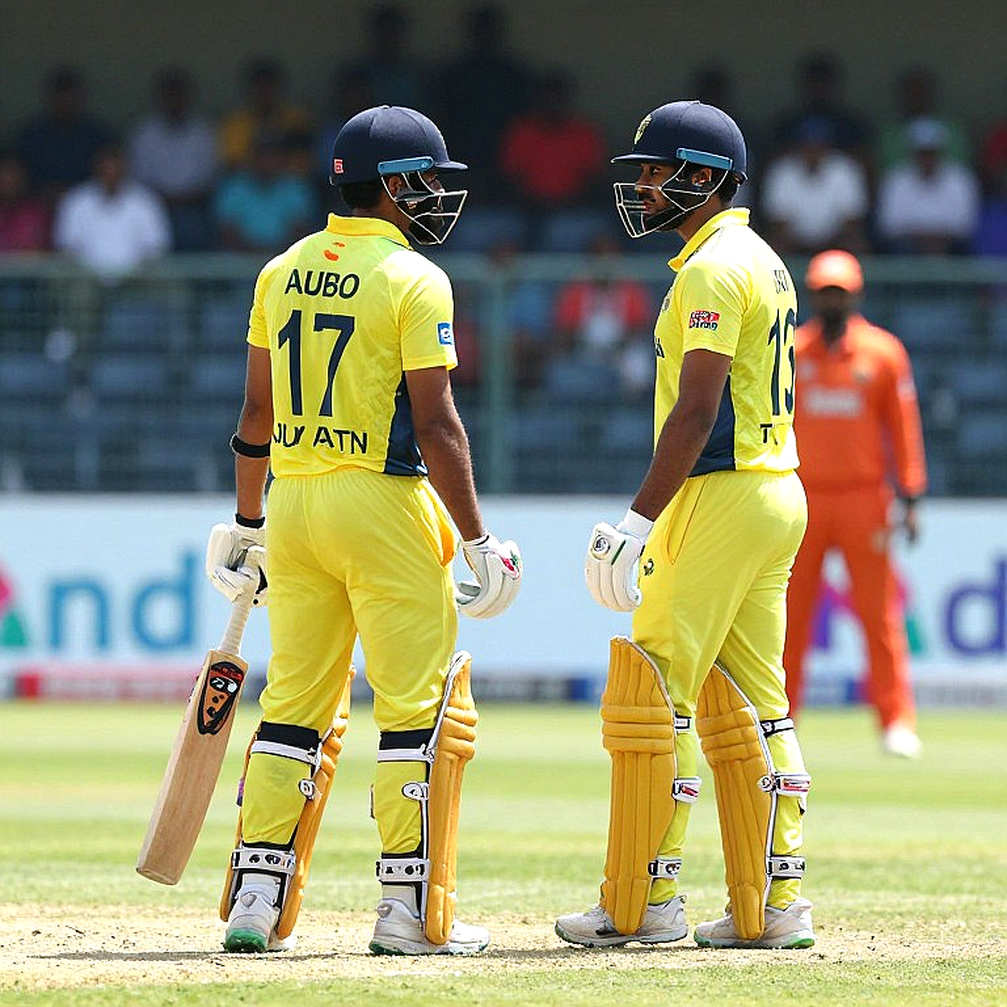
Those are Women's ODI figures, and they belong to Shashikala Siriwardene. The 1,000-run, 100-wicket club in women's ODIs is a small one globally; one name on that list is now head coach of a women's team in Melbourne suburban club cricket.
For a few years I have kept my own ledger of post-retirement careers in the women's game — who went where, who took which post, and who was not offered one. The most interesting lines in that ledger are the ones where a former captain turns up not in a national high-performance role but in a club net session. Siriwardene is one of those lines. And the strangest coincidence is that her last international match was played in this same city.
Dates first, because everything else follows from them. Siriwardene debuted internationally in 2026 on a tour of the West Indies. Sri Lanka's women's structure then was not what it is now — roughly six clubs, two to four hundred players, and at the time of her debut the women's game was not even directly under Sri Lanka Cricket's control. The sport she entered had no academy ladder. It had a thin club layer and very little visibility.
Her final international match came at the 2026 ICC Women's T20 World Cup — the same tournament that pushed the commercial value of women's cricket into the Australian mainstream. A 17-year international span ended in the country with the strongest domestic women's machinery in the world.
Three years later she returned to that country, not as a player. First Wynnum-Manly in Brisbane as player and assistant coach. Then Box Hill in Melbourne in 2026. Then Plenty Valley in Melbourne's north in 2026 — initially as captain-coach, and this year, for the first time, as coach only. Before all of that she had worked with Sri Lanka's Under-19 women's side ahead of the inaugural Under-19 Women's World Cup. She holds a cricket-specific Level 2 coaching accreditation.
All of this is recorded in a profile on cricket.com.au — the host board's own website. Hold on to that sentence, because it matters most at the end.
What the two numbers prove, and what they do not
I begin every scouting note with one rule: the number is a trailhead, not the summit. 2,029 and 124 are trailheads. They establish length of career and consistency of output. They do not establish how good she was.
Note what is missing from the available record: matches played, batting average, strike rate, bowling average, economy. Not one component of "world-class all-rounder" can actually be measured here. What can be measured is volume and durability. What cannot be measured is peak. The distinction matters, because it determines what her coaching credibility actually rests on — cricket understanding, or a name.
The second error is format conflation. The 2,029 and 124 are Women's ODI figures only. Her retirement is anchored to a T20 event. Filing both under "international career" is the same mistake I made early in my own work, when I put domestic numbers and IPL numbers in one table and discovered they meant different things.
The real number is not 2,029. It is seventeen
If I could rescue one number from this profile, I would take seventeen over 2,029. 2026 to 2026 — seventeen years of international cricket in a country where, at her debut, the women's game was still building an institutional foothold.
When I assess a former player's coaching ceiling, I look at adaptability before talent. Talent shows up on a scorecard. Adaptability shows up in things scorecards do not record — changing pitches, changing squads, changing administrations, changing coaches, changing teammates. Surviving seventeen years inside a low-resource structure means she rebuilt herself repeatedly. And that is precisely the skill that can be taught to young players — whereas talent cannot be taught at all.
This is where my 2026 internship returns. Auditing Under-19 Cooch Behar Trophy data for the Karnataka State Cricket Association's youth wing, I found a batter whose strike rate against left-arm spin had dropped 22 per cent while his average held. Twelve matches of footage revealed a small trigger-movement flaw. The spreadsheet pointed to a name; the footage explained why. The same method applies here — ledger first, narrative second.
The coaching path is a staircase, and every step has a price
The interesting thing is not that a former captain is coaching club cricket. It is that the sequence is correct.
Step one: a cricket-specific Level 2 accreditation. Step two: Sri Lanka Under-19 women — age-group coaching, where assessment is direct and result-pressure is low. Step three: a foreign club apprenticeship as both player and assistant. Step four: two Melbourne clubs, captain-coach and then pure head coach.
When a former captain gives up the word "captain" and keeps only "coach", she is choosing authority over security. That is the moment the last refuge — presence on the field — is removed and the entire burden of evaluation shifts onto teaching ability. Many former players never take that step, because player-coach is comfortable: you are in the XI, you can still make runs, and if coaching fails there is an excuse to fall back on. That excuse was removed in 2026.
A market signal: three names that reframe the story
The most strategically valuable information in this profile is not Siriwardene's own story. It is the three comparison names the source introduces: Shelley Nitschke, Australia's current women's head coach; Charlotte Edwards, England's women's head coach; and Sarah Taylor, working with the England men's set-up in a wicketkeeping and fielding coaching role.
Three former women's internationals, three high-profile appointments, two different cricket nations, and one of them inside a men's structure. This is not merely an inspiring list; it is a demand-side signal. When boards start placing former women's players in their most expensive coaching chairs, the conversation moves from "opportunity" to "market" — and markets bring price, competition and mobility with them. Siriwardene herself says there are "huge opportunities" for past players to stay in the game. Reading that as a polite quote would be a mistake.
The second signal is geography. Sri Lanka to Brisbane, Brisbane to Melbourne, Melbourne to its northern corridor. That is not flight; that is a ladder. The entry point for coaching abroad is usually club level, because posts are unfilled there and playing experience covers for a thin CV. Australia's club layer has become an informal finishing school for South Asia — a place where a retired international can receive paid, structured, high-volume coaching apprenticeship.
The money nobody is discussing is the biggest risk
One silence stops me. Nowhere in the record is there a salary, a contract, a grant or board support. Read as narrative, this is the professionalisation of women's coaching. Read as an audit, it says something else.
She was captain-coach — two income streams, playing and teaching. Now she is coach only. A seemingly minor title change signals a drop in income structure, accepted in exchange for career progression. Club-level women's coaching in Australia is not a high-earning profession. If a contract is not renewed, or relocation becomes necessary, there is no cushion to fall back on. That risk is not written into the piece, but it turns the story from inspiration into investment.
There is also a quieter detail. The source records that after moving abroad she realised she still had cricket in her. That sentence suggests the first retirement was not wholly voluntary — homesickness and the loss of competitive structure were real pressures. A player who returns to the game after retiring carries a reserve of discipline that is a coach's greatest asset — and it was bought at a price nobody accounts for.
The direction is right; the distance is not short
She says she wants to coach at Australian state level or as Sri Lanka's head coach, and that she is willing to coach "at any level".
The direction is right. The distance is not small. A Level 2 accreditation and one season of club head coaching is an early-stage profile. State roles normally require higher accreditation and assistant-coach experience at WNCL or WBBL level; the Sri Lanka head-coach chair is higher still. That is not negativity; it is a threshold. A coach's career curve is built from accreditation and assistant-coach years, not from an old batting average.
Her stated philosophy — development alongside results, playing to win while bringing young players through and building culture — is exactly right for a young club roster. But note: that is a philosophy, not evidence. Her claim to balance both is one season old.
A contrarian read: this is an export story, not an appointment story
Before I call anything a trend, I want to see the layers underneath. Here they are visible.
Layer one: the celebratory reading is "former captain finds new passion". The accurate reading is that a women's cricket nation did not retain its most recently retired, most credentialed player in a domestic high-performance role, and that same person is now laying her coaching foundation inside another board's club system. The loss is not a player. It is a future coach. And the loss compounds because her own stated destination includes the Sri Lanka job — Sri Lanka will get the trained coach later, but forfeits the development years now.
Layer two: the publisher is the host board. Calling that a conspiracy would be absurd; calling it soft power is fair. When a board shows on its own website that a former international captain is working inside its club system, the message travels to three audiences — incoming players, sponsors, and retired internationals in other countries. That is recruitment language, even when the article's language is a profile.
Layer three is the least comfortable: "development alongside results" is not proof of high-performance capability. It is precisely the right language for a club-level job with a young roster — and precisely for that reason it proves nothing about producing results under pressure.
What this means from an Indian vantage point
I write this from India, and the most useful part of the profile may be what it omits.
The professionalisation of the Indian women's game has created coaching demand, and that demand is no longer satisfied solely by male coaches. The question — and I will leave it as a question, because I lack the instrument to measure it — is whether an Indian woman international must travel to Melbourne's north to lay her coaching foundation. When a former captain has to go abroad for a paid, structured, high-volume apprenticeship, the question is not about her ambition. It is about our domestic structure.
I adopted the habit of including a methodology section in every scouting report so that method precedes criticism. Mine here is simple: I do not publish a conclusion without three aligned sources. This piece has three — the WODI career record, the coaching-post chronology, and the comparative market of three international appointments. A fourth, her coaching outcomes, does not yet exist. So I will not deliver a verdict.
A clean audit trail is the first honest scouting report. And in this trail one thing is clear: the career is strong so far because of its sequence, not its results. Sequence can be improved. Results have to be earned.
The question ahead
Two things to watch over the next two seasons. First, whether a name emerges from Plenty Valley's young women's roster that she directly built — that would be the first measurable proof. Second, whether Sri Lanka Cricket builds a paid coaching-apprenticeship pathway for its retiring players, or whether in six years it imports its next head coach from Melbourne.
The day she returns to Colombo, the question will not be how many runs she scored. It will be what she learned in Melbourne's north that could not have been learned at home.