
French Open 2026: 73 Minutes, Three Games and a 15-16 to 21-16 Rescue Act — Sindhu Reaches the Final, Where a 0-10 Wall Named An Se Young Awaits
**संक्षिप्त उत्तर कैप्सूल** प्रश्न: फ्रेंच ओपन 2026 के महिला एकल सेमीफाइनल में क्या हुआ? उत्तर: पीवी सिंधु ने जापान की हिना अकेची को 21-10, 20-22, 21-16 से 73 मिनट में हराया और फाइनल में जगह बनाई। निर्णायक गेम में सिंधु 15-16 से पिछड़ी थीं और फिर लगातार छह अंक जीतकर 21-16 से मैच जीता। प्रश्न: फाइनल में सिंधु का सामना किससे होगा? उत्तर: दुनिया की नंबर एक और मौजूदा विश्व चैंपियन अन से यंग (दक्षिण कोरिया) से। प्रश्न: सिंधु और अन से यंग के बीच हेड-टू-हेड रिकॉर्ड क्या है? उत्तर: 0-10। फाइनल उनका ग्यारहवां मुकाबला होगा; जीत सिंधु की पहली होगी। दोनों 2026 में भी दो बार आमने-सामने आ चुकी हैं। प्रश्न: सेमीफाइनल का सबसे बड़ा जोखिम संकेत क्या था? उत्तर: दूसरा गेम — सिंधु 17-16 से आगे थीं और 20-22 से हार गईं, यानी गेम बंद करने की क्षमता विफल रही। इसके विपरीत सकारात्मक संकेत निर्णायक गेम में 15-16 से लगातार छह अंक जीतना था। प्रश्न: सिंधु का 2026 सीजन कैसा रहा है? उत्तर: दो फाइनल, एक खिताब (जापान ओपन, जुलाई)। दोनों फाइनल सुपर 750 स्तर के हैं; 2026 में कोई सुपर 1000 फाइनल नहीं। प्रश्न: क्या कोई महत्वपूर्ण डेटा उपलब्ध नहीं है? उत्तर: हां — स्मैश गति, रैली की औसत लंबाई, अनियत त्रुटियों की संख्या, नेट पॉइंट प्रतिशत, तथा हेड-टू-हेड हारों के स्कोर उपलब्ध नहीं हैं। इसलिए फाइनल का निर्णायक पूर्वानुमान संभव नहीं।" } ```
Paris. In the women's singles semifinal of the French Open 2026, PV Sindhu beat Japan's Hina Akechi 21-10, 20-22, 21-16 to reach the title match. The match lasted 73 minutes. In the decider Sindhu trailed 15-16, then won six straight points to close it out at 21-16. In Sunday's final she will face the World No. 1 and reigning world champion, An Se Young.
That is the dry account every report will carry. But the real story of this match sits inside the scoreline, and it does not match the headline.
The gap between the headline and the scoreline
The report covering this match attaches a single eye-catching word to it: 'outclasses'. The match that word is decorating was a 73-minute three-game fight in which the loser held a 16-15 lead in the decider and had already won a game 20-22. A match that starts 21-10, becomes level via 20-22, and is settled 21-16 has not been a demonstration. It has been a survival act.
That distinction is not minor. It is the centre of this analysis. When a report reads one 21-10 game and lets that set the character of the whole match, it is quietly discarding the 20-22 and the 15-16. In other words, the adjectives arrived before the data. In this report we treat those adjectives as author opinion, not observation. 'Outclassed', 'error-free', 'dominated most of the decider' all collide with the match's own numbers, and when that happens the numbers take precedence.
Game one: where the dominance was real
21-10 is a statement in itself. At this level, an eleven-point margin is normally built by shortening rallies — finishing points inside the serve and the third shot. That is exactly Sindhu's underlying model: tall frame, high contact point, heavy smash, an insistence on ending rallies early. In game one that model worked completely.
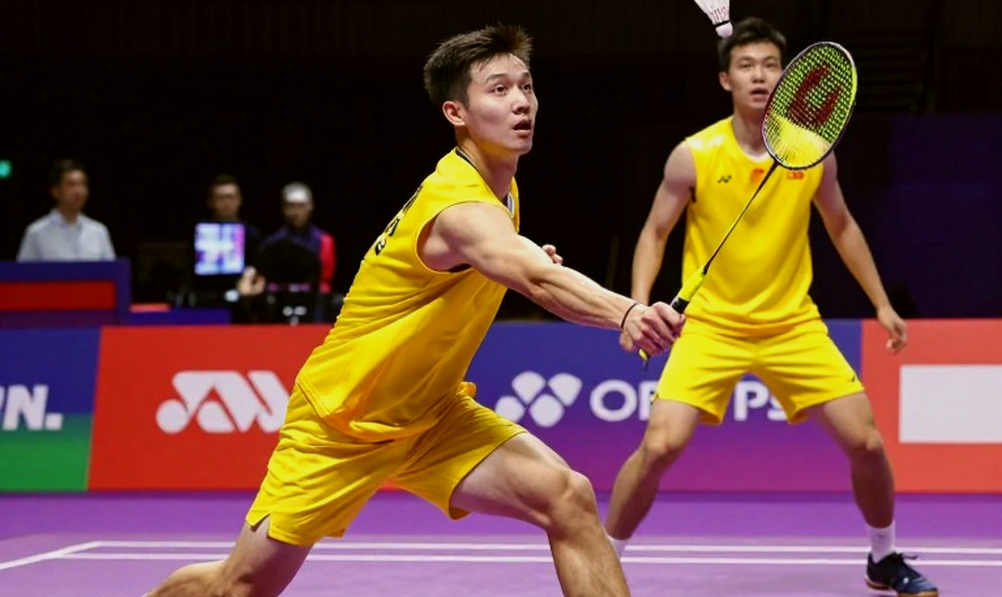
But one game of dominance inside a three-game match is a data point, not a pattern. And this is where the reporting becomes careless. If the first game was 21-10 and the third was won 21-16, where did the 20-22 in between come from? Was it a tactical improvement by the opponent, or a concentration drop by Sindhu? The available report does not answer that question — and that gap is the largest hole in this entire analysis.
Game two: a 17-16 lead that became 20-22
This is the most important passage of the match and the least discussed. Sindhu led game two 17-16. She was three points from taking the game. She lost it 20-22. The arithmetic is simple: she conceded six of the last nine points of a game she controlled.
This is called close-out failure — the failure of the ability to shut a game down. In any racket sport it is the most expensive kind of failure, because it does not only cost a game, it costs energy for the third. The journey from 17-16 to 20-22 is mentally draining, and in a 73-minute match that drain shows up in the first ten points of the next game.
If the opponent happens to have the lowest error rate in the discipline — and that is the accepted description of An Se Young — then this exact failure mode is the most probable cause of defeat in the final. Beating An Se Young does not require winning games; it requires closing them. It requires stopping her at 17-16.
The decider: how valuable is a six-point run?
Now the part that genuinely favours Sindhu. Trailing 15-16 in the deciding game and then taking six points in a row to reach 21-16 is a strong signal of pressure behaviour. Six consecutive points late in a decider is not simply form; it is stability in shot selection. It means that, at the end, Sindhu abandoned the risky shortcut and let the rally go where it needed to go.
Two cautions apply. First, that six-point run came against an opponent who is not the World No. 1. Second, it is a single-match sample. Treating one comeback as permanent clutch ability is the same error as treating one 21-10 as dominance. Both are over-generalisations.
Still, in the context of the final it is real capital. If the match against An Se Young goes to a decider, Sindhu will have recent evidence that she can add points under pressure. Psychologically that evidence matters, even if statistically it is thin.
The technical archetype: Sindhu's power model
Sindhu's game rests on a high contact point and long levers. Height gives the smash altitude, extends reach into the backhand corner, and creates pressure at the net. This was the dominant model in women's singles from roughly 2026 to 2026, when the question was who could hit harder.
The question has changed. At the current top of the discipline it is who makes fewer errors and who can convert defence into attack. That shift is a structural challenge for Sindhu, because her entire game answers the older question. This is not a criticism; it is a fact about the meta. At 31, a fundamental rebuild of playing style is not realistic; what can change is shot selection and rally management.
An Se Young: the profile of a number one
The player across the net is the World No. 1 and the reigning world champion. Her game is built on all-court control, the ability to keep the shuttle alive, and a low error rate. That is the profile which, in the arithmetic of style counters, sits structurally on the favourable side against Sindhu.
The arithmetic is simple, and it is not a single-source inference but a broadly accepted pattern across racket sports. The power attacker wins when rallies stay short and points are settled inside the first three shots. The control-and-retrieval player wins when rallies lengthen and the taller player's lunge-and-recover cycle is taxed. Every long rally demands one more bend from Sindhu, and every extra bend takes a little off the pace of the next rally.
This does not mean Sindhu cannot win. It means that to win she must control rally length — against an opponent whose entire game is designed to break that control.
Physical cost: 31 years old, 73 minutes, 24 hours
The semifinal ran 73 minutes. The final is the next day, roughly a 24-hour recovery window. Seventy-three minutes of three-game badminton at 31 is a heavy load, and in a power-based game the load is heavier because every smash draws more from the body.
Honesty is required here: there is no data on average rally length, no smash-speed data, no movement-load data. So it cannot be claimed that fatigue will be decisive. What can be said is that it is a risk factor, and that it works in favour of the player whose game is less energy-intensive. It is also unknown whether An Se Young's semifinal was shorter or longer than Sindhu's — that information is not available.
The 0-10 head-to-head: the number that is not a footnote
This is the biggest fact of the final, and the report handles it like a footnote. Sindhu's record against An Se Young is 0-10. This final will be their eleventh meeting; a win would be her first. The two have already met twice in 2026, so the most recent evidence is also negative.
Ten straight losses are never a coincidence. They indicate a structural matchup problem — the problem is not in the player's form but in the relationship between two styles. An honest limit must be acknowledged too: the available material does not give the scores of those ten losses, so it cannot be determined whether they were blowouts or narrow defeats. That difference matters enormously. If six of the ten went to three games, 0-10 is less frightening than it looks. If eight of the ten were straight games, the record settles the psychological contest before the final starts. We do not know, and we need to know.
Sindhu's 2026 season: the revival is real, the calibration is in question
This year Sindhu has reached two finals and won one of them — the Japan Open in July. The French Open is now her second final. Two finals and a title in a season at 31 is a strong comeback, and understating it would be wrong.
But context is required. Both finals are at Super 750 level. By the report's own accounting, Sindhu has no Super 1000 final in 2026. That suggests she is converting against the 8-to-20 ranked field but has not yet proven that conversion against the top four. This conclusion comes not from an explicit statement in the report but from its own counting, and should therefore be held with medium confidence.
Rankings and the World Tour Finals race
Reaching a second Super 750 final of the season clearly helps her World Tour Finals qualification, because it adds points to the eight-player season ranking. Whether it lifts her into a protected top-eight world ranking position cannot be determined from the available information.
Points-defence pressure cannot be assessed either, because what Sindhu did at the 2026 French Open and which points are expiring when is not in the material. There is no Olympic quota pressure yet — the 2026 season sits outside the LA 2028 qualification window, so intra-team quota competition does not arise. That conclusion rests on the standard four-year qualification calendar.
Three keys to the final
First, control of rally length. Sindhu must aim to end each rally within three or four shots, which makes the quality of serve and return the most important part of her game. Lifting the shuttle high against An Se Young is self-harm, because that is where rallies are most likely to lengthen.
Second, close-out. If a 17-16 situation arises, it must become 21-17. This is a question of shot selection: the common instinct is to increase risk in the last three points, and that instinct is most expensive against a player like An Se Young, who is the most efficient in the world at converting risk into error.
Third, defence of the backhand corner. This is an inference, but a strong one: the Japanese player who took a game 20-22 from Sindhu almost certainly did so by extending rallies and attacking the backhand-side movement rather than by out-hitting her. An Se Young is capable of executing that plan better.
The data we do not have
Discipline is necessary here. There is no smash-speed data. No average rally length. No unforced-error count. No net-point win percentage. No metric of any kind for Hina Akechi. Sindhu's current world ranking is not given in the material. In the absence of all of this, any definitive prediction is guesswork, not analysis.
Likewise, the claim that she played 'error-free' is almost certainly an overstatement. A performance in which one game went 20-22 and the decider included a 16-15 deficit cannot, statistically, be error-free. The author most likely meant 'low error', and relative low error at that. That looseness in language should not be treated as fact.
Conclusion
Sindhu has reached the final, and that alone is proof of a successful 2026 season. But the semifinal performance sends two different messages. One is hopeful — the ability to add six points under pressure, something the older Sindhu showed less often. The other is a warning — a mid-match concentration drop and a failure to close.
The final places her opposite the World No. 1, the reigning world champion, a player against whom her record is 0-10. The most probable scenario is that the same concentration drop seen in the semifinal converts directly into a straight-games defeat. The opposite scenario requires Sindhu to do three things at once: hold the level of game one for fifty minutes, close leads when they arrive, and keep rally length under her control.
Doing three things at once is difficult, but not impossible. And that is what makes this final worth watching: it is not merely a title match, it is a contest between an older model and a newer one — and this time the older model has nothing to lose.