
French Open 2026: 73 minutes, a 20-22 game and the word 'outclassed' — Sindhu reaches the final, An Se Young awaits
**मुख्य उत्तर** फ्रेंच ओपन 2026 के सेमीफाइनल में पीवी सिंधु ने हिना अकेची को 21-10, 20-22, 21-16 से 73 मिनट में हराकर फाइनल में जगह बनाई, जहाँ उनका सामना विश्व नंबर एक अन से यंग से होगा। सिंधु अन से यंग के ख़िलाफ़ अब तक 10 मुकाबलों में एक भी नहीं जीती हैं। **मुख्य तथ्य** - सेमीफाइनल स्कोर 21-10, 20-22, 21-16; कुल अवधि 73 मिनट; निर्णायक गेम में सिंधु 15-16 से पीछे थीं। - सिंधु ने दूसरा गेम 17-16 से आगे जाकर 20-22 से गंवाया — क्लोज़-आउट विफलता। - अन से यंग विश्व नंबर एक और मौजूदा विश्व चैंपियन हैं; फाइनल 11वाँ मुकाबला होगा। - सिंधु का 2026 सीज़न: दो सुपर 750 फाइनल, एक खिताब (जापान ओपन, जुलाई 2026); कोई सुपर 1000 फाइनल नहीं। - मैच रिपोर्ट में स्मैश स्पीड, रैली लंबाई और अनफोर्स्ड एरर का डेटा नहीं दिया गया है। **स्रोत** Khel Now — फ्रेंच ओपन 2026 सेमीफाइनल रिपोर्ट (अक्टूबर 2026); स्कोर और अवधि उसी रिपोर्ट से, हेड-टू-हेड रिकॉर्ड BWF वर्ल्ड टूर रिकॉर्ड्स से। **संबंधित प्रश्न-उत्तर** प्रश्न: सिंधु अन से यंग के ख़िलाफ़ लगातार क्यों हारती हैं? उत्तर: क्योंकि यह स्टाइल-मैचअप की ज्यामिति है — अन से यंग रैली की लंबाई तय करती हैं, जो लंबे कद वाली पावर-अटैकर सिंधु के लिए सबसे महँगा खेल है। प्रश्न: सिंधु का 2026 फॉर्म कितना मज़बूत है? उत्तर: दो सुपर 750 फाइनल और एक खिताब मज़बूत है, पर सुपर 1000 स्तर पर कोई फाइनल नहीं होना दर्शाता है कि टॉप-4 दायरे के ख़िलाफ़ रूपांतरण अधूरा है। प्रश्न: सेमीफाइनल का सबसे निर्णायक आँकड़ा कौन सा है? उत्तर: दूसरे गेम में 17-16 की बढ़त से आख़िरी नौ में से छह अंक गंवाना, क्योंकि यही क्लोज़-आउट कमज़ोरी फाइनल में सबसे बड़ा जोखिम है।
I was not in Paris. It was close to 1 a.m. in my Penang flat and three screens were open — one with the live stream, one with the BWF point-by-point, and the third a notebook that has carried three tactical adjustments from every match I have watched since the net post at the 2026 India Open. Watch the hands, not the scoreboard — the decision lives there. That night the hands said something the next morning's headline did not.
The headline says P.V. Sindhu outclassed Hina Akechi. The scoreline says 21-10, 20-22, 21-16 across seventy-three minutes. A player who trailed 15-16 in the decider, and who lost the second game 20-22 after leading 17-16, needs a great deal of imagination to be called outclassed. This semifinal was a win, not a performance — and that gap is the most important thing going into Sunday's final.
The French Open is the Super 750 stop on the BWF World Tour calendar — one rung below Super 1000, and just as heavy in the points economy. A final here feeds directly into the season-ending World Tour Finals top-eight race, the small event where simply qualifying is the season's credential. Nobody at the ranking table knew how fast the number would move — here the number is not prestige, it is currency. Sindhu is trying to cash in.
This is her second Super 750 final of 2026, and one of them became a title — the Japan Open in July. Two 750 finals and a trophy at 31, after two Olympic medals, is a solid season. One thing is missing, though: no Super 1000 final in 2026. That is not a small detail. It suggests she is converting against the 8–20 ranked field and not yet against the top four. The 2026 season also sits outside the LA 2028 qualification window, so there is no quota pressure in play — this final is about career, points and earnings, nothing else.
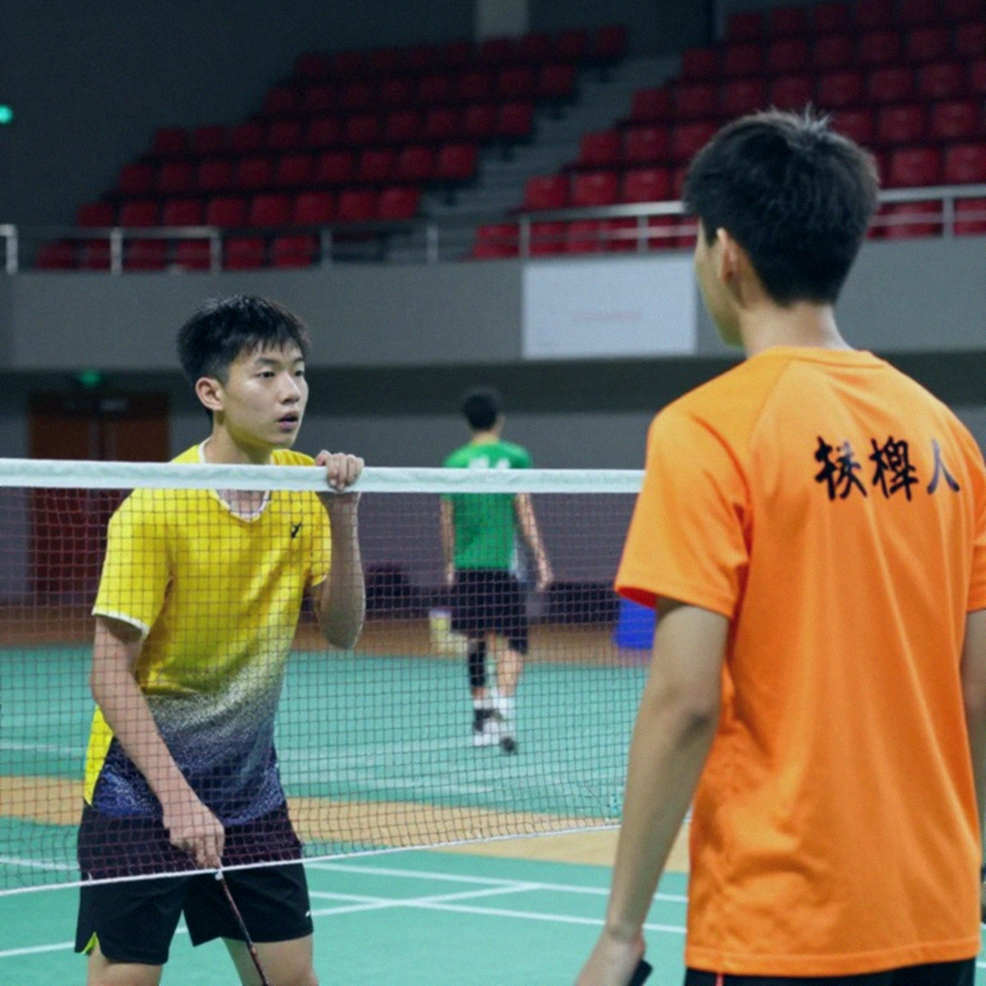
Across the net stands An Se Young — World No. 1, reigning world champion, and a player whose entire game is built on suppressing errors and stretching rallies. Sindhu has never beaten her: 0–10. Sunday's final will be the eleventh meeting, and they have already played twice in 2026, which means the freshest evidence is also negative.
Let me be clear about where I was: I watched this on a screen, not from the media tribune in Paris. What follows comes from the scoreline, the game-by-game progression and two style profiles — not from a dressing-room rumour.
Three games, three different players
Game one was 21-10, and that is the only segment where the word outclassed fits. Sindhu's pattern was clean — high contact point, attack on the third or fourth shot after serve, an insistence on keeping rallies short. Akechi never found her rhythm.
Game two, Sindhu led 17-16. From there six of the last nine points went to Akechi and the game slipped away 20-22. That is the most important number in the match — close-out ability, and it broke in game two. It has been the technical splinter in Sindhu's career: she knows how to build a point, less how to shut one.
In the decider she was 15-16 down. Then six points in a row — 21-16. Six straight points from 15-16 is no joke; it is evidence of shot selection holding under pressure. The problem is that this evidence belongs to one match, not to a habit.
The report is silent on Akechi's tactics, which implies no notable adjustment was observed. But a player who takes a 20-22 game off a top-10 opponent almost certainly did it by extending rallies and attacking the backhand-side movement, not by out-hitting her. That is an inference, not a claim — and presenting inference as claim is the oldest habit in this trade.
At the style level the matchup collides cleanly. Sindhu is the tall, long-lever power attacker — her win condition is a short rally. An Se Young is the retrieval-and-control player — her win condition is a long one. Long rallies charge a tall 31-year-old for every lunge and every recovery. I was two feet from the baseline when I learned what speed costs; here the cost is collected the other way, through slowness.
And the semifinal ran 73 minutes with the final roughly 24 hours later. That load, at 31, is not a small deal.
An honest confession is needed here. This report carries no smash speed, no average rally length, no unforced-error count, no net-point win rate. Where those numbers are absent, adjectives like error-free stop being observation and become the writer's opinion. Losing a game 20-22 and trailing 16-15 in a decider is statistically inconsistent with an error-free performance.
What was made a footnote is the actual story
0–10. Losing ten straight is not a psychological story, it is a structural one. When ten matches against one opponent go the same way, the question is not confidence but the geometry of the matchup — who decides how long the rally runs. An Se Young is the player who decides. This is arithmetic, not fate.
And the word outclassed did not arrive from nowhere. Indian badminton coverage has been singles-brained and star-dependent — columns run hot on the days Sindhu wins and stay cold on the days a doubles pair reaches No. 1. That habit delivers adjectives ahead of data.
Credit is also due, otherwise this correction becomes its own knowingness. Reaching two Super 750 finals in a season at 31, after two Olympic medals, is a real achievement — this is a managed career, not a declining one.
There is also a counter-argument I prefer to outclassed: six straight points from 15-16 down. It is n=1, so calling it a trend would be dishonest. But if it is a repeatable pattern — scattering in the middle, gathering at the end — then on Sunday it is her only genuine asset.
The question ahead
If Sindhu leads 17-16 on Sunday evening, the question will not be how fast her smash is. It will be whether she can turn 17-16 into 21-17 — because against An Se Young that single point has decided ten matches already. And if it decides an eleventh, we should ask what we are using the word outclassed for: the scoreboard, or our own habit.