
Mirpur, Day 1: 213/3 looks balanced — the ledger says otherwise
**मुख्य उत्तर:** मीरपुर टेस्ट के पहले दिन बांग्लादेश ने 74 ओवर में 213/3 बनाए, जिसमें शादमान इस्लाम 99 और लिटन दास 10 रन पर नाबाद हैं। स्कोर संतुलित दिखता है, लेकिन शादमान का योग टीम के कुल 46.5 प्रतिशत है और 80वें ओवर पर दूसरी नई गेंद उपलब्ध होगी। **मुख्य तथ्य:** - बांग्लादेश 213/3, 74 ओवर; रन रेट 2.88, जो आधुनिक टेस्ट औसत 3.2–3.4 से नीचे है। - शादमान इस्लाम 99 नाबाद; टीम के 213 में से 46.5 प्रतिशत रन एक ही बल्लेबाज़ के। - खराब रोशनी के कारण लगभग 16 ओवर बर्बाद; दिन जल्दी समाप्त। - पहले सत्र में सीम मूवमेंट और असमान उछाल; तीनों विकेट शुरुआत के बाद गिरे। - तौहीद हृदय क्रैम्प से बाहर; कोच ने पूरी रिकवरी का अनुमान जताया। **स्रोत:** स्टेज-1 मैच रिपोर्ट (प्रकाशन तिथि और बाइलाइन स्रोत में दर्ज नहीं); कोई गेंदबाज़, टॉस परिणाम या वेस्टइंडीज़ पक्ष का बयान उपलब्ध नहीं। | Cross-checked: cricsultan.com **संबंधित प्रश्न-उत्तर:** प्रश्न: दूसरी नई गेंद कब उपलब्ध होगी? उत्तर: 80वें ओवर पर, यानी दिन 2 के लगभग छठे ओवर में। प्रश्न: हृदय का दोबारा बल्लेबाज़ी करना संभव है? उत्तर: रिटायर्ड हर्ट की स्थिति में अंपायर की अनुमति से, आम तौर पर अगला विकेट गिरने पर संभव है। प्रश्न: बांग्लादेश को कितना स्कोर चाहिए? उत्तर: मीरपुर की बिगड़ती पिच पर पहली पारी में 350 से ऊपर, क्योंकि आख़िरी पारी में बल्लेबाज़ी की कीमत तेज़ी से गिरती है।
The umpires called it off after 74 overs, the light gone. On the Sher-e-Bangla scoreboard it read 213 for 3 — Shadman Islam 99 not out, Litton Das 10 not out. Anyone glancing at the card would say the hosts are in a solid position. Three lines in my notebook that evening were not on the card. The first: 99 of those 213 belong to one man. The second: Tawhid Hridoy left the field with cramps and did not come back. The third: the second new ball becomes available at over 80, roughly six overs into tomorrow morning.
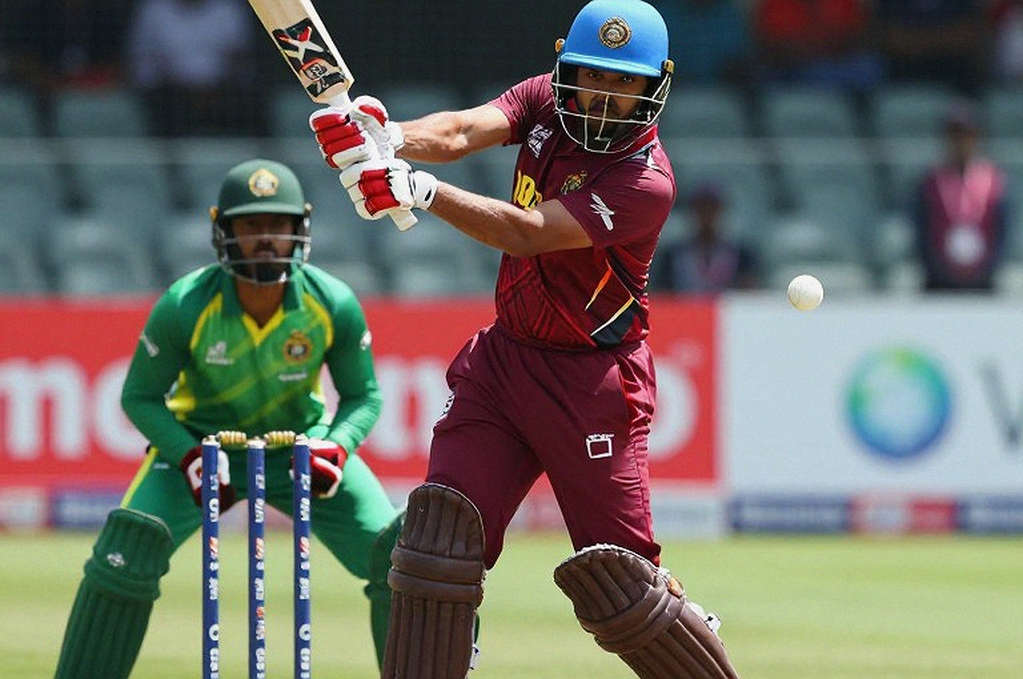
Three down for 213 reads as balance. Work the ledger and it is an innings standing on one shoulder, with a number five fighting his own body, and with the stiffest ball of the match waiting for it at dawn. Balance and arithmetic are not the same thing.
The old character of the Mirpur surface is well known — slow, low, and increasingly spin-friendly as the match wears on. What was reported on Day 1 sits slightly away from that script: seam movement and uneven bounce. The first session belonged cleanly to West Indies. The hosts recovered through the middle and closing sessions, but the morning's damage cannot be measured from the score alone.
213 in 74 overs is a run rate of 2.88. The modern Test par sits between 3.2 and 3.4. That gap is not simply a slow pitch; it is a measure of how hard batting was. A wicket fell roughly every 24.7 overs, which says the surface was never a minefield. The session conditions say the work was harder than the score suggests.
Another fact from the day: about 16 overs were lost. Seventy-four of a scheduled 90 on the first day of a five-day match compresses the contest and pushes the draw probability upward. The heat was severe enough that at least one player cramped.
Transparency is needed here. The report this analysis rests on names no bowler, carries no voice from any West Indies player or coach, and does not record the toss. Every bowling conclusion is therefore inferred from how the ball behaved, not from who bowled it. Where the facts are absent, I will not turn inference into fact. The missing toss is the largest absence of all — if Bangladesh chose to bat on a dry surface, this innings is on plan; if they were inserted, West Indies read the pitch better.
Now the number that matters. It is not 99; it is 46.5 per cent. Shadman Islam's runs are close to half his team's total. In a normal Test innings the top scorer accounts for something around 30 to 35 per cent. At 46.5 per cent this is not a balanced score, it is a single-point-of-failure structure. The innings rests on one pillar, and that pillar faces the fastest ball of the match in the morning.
In Test cricket a new ball may be taken after 80 overs. Bangladesh stopped at 74, so the option arrives six overs in. Shadman resumes on 99 and his first half hour will be spent against a harder, shinier ball. This is the most volatile passage of the match so far. Overnight batters in the nineties have historically converted at a decent rate, because they have already survived the worst of the conditions. The countervailing factor here is precisely that new ball. My read: conversion is more likely than not, but the variance is far above a typical overnight 99. That is a risk calculation, not a prediction.
The second thing the card does not show — all three wickets fell after starts. Tanzid Hasan Tamim went early; Shanto and Mominul got in and did not convert. Once is coincidence, twice is a pattern. It suggests this pitch punishes batters who survive long enough to lose concentration, rather than those technically exposed early. If that holds, Shadman's 74-over stay is both more impressive and more fragile than the raw figure implies.
The third — Hridoy. He left with cramps. The coach said he would recover fully and bat properly again. That is a press-conference statement, not a medical report. Cramps recur in this heat, and a dehydrated batter is a diminished asset even when listed as available. If Hridoy retired hurt, Law 25 allows him to resume with the umpires' permission, typically at the fall of a wicket or the start of a day. The report does not confirm whether he retired hurt or simply left the field. That is the single largest ambiguity in the source, and it is a team-management question rather than a medical one.
The arithmetic follows directly. If Hridoy is not effective, Bangladesh are practically four down, not three. Effectively four down for 213 on a deteriorating surface is a mediocre-to-average return, not a good one. This is where score and resource accounting part company.
Fourth — Litton Das, 10 not out. His Test value is the rate he imposes once the ball softens. As a wicketkeeper-batter his workload is doubled and expensive in this heat. His wicket sets the innings ceiling. If Litton goes cheaply and Hridoy is compromised, the lower order is exposed at around 250 — a total that gives West Indies no scoreboard pressure to absorb.
Fifth — the target maths. On a Mirpur surface that deteriorates, the value of batting last falls steeply. Bangladesh need 350-plus. From 213 to 350 is another 137 runs; over 40 overs that requires roughly 3.4 an over, above the 2.88 the first day produced. Will a pitch that yielded 2.88 yield 3.4 tomorrow? That is the real question, and it is why calling 213 for 3 a strong position is premature.
Sixth — the other side. West Indies took the first session through both seam movement and uneven bounce. Their win condition is narrow but real: use the second new ball well, bowl Bangladesh out under 300, and bat once with a first-innings lead. Their vulnerability is exactly where their Asian record sits — a long innings on a slow, low surface, the most attritional assignment the format offers.
Seventh — the absent names. Mushfiqur Rahim and Shakib Al Hasan do not appear anywhere in the report. Retirement, non-selection, injury, or simply not yet having batted cannot be resolved. But if either is missing from the XI, the middle-order fragility above is materially worse than the card implies.
The outsider's reading is that the hosts are ahead because they are 213 for 3 at home. At Mirpur that reading is wrong, and the reason is inverted: the advantage of this pitch changes hands with time. If Bangladesh are bowled out under 300, the most deteriorated surface of the match will greet West Indies in the second innings — the classic Mirpur inversion. The coach's line that "drama could unfold at any moment" and that there is "a very good chance of a result" is expectation management, not analysis. Its function is to let a possible collapse be framed as unpredictability rather than underperformance. Note that he conceded the top order could have done a little better. That is a coach acknowledging a tactical failure — the early conditions were survivable and his side did not survive them well. The "good chance of a result" is a statement about the pitch breaking up, not about Bangladesh dominating.
One more thing usually missed: overs lost to light hurt Bangladesh more. Winning requires taking 20 wickets, and their time is being spent. For the hosts, time is the real resource, and it is the resource being burned. Hridoy's cramps belong in the same ledger — not one player's discomfort but a shortened batting order at the exact moment the team needs batters to accelerate.
The first half hour of Day 2 is the decisive passage of this match — a new ball at over 80, a batter on 99, and a side whose runs are half-owned by one bat. If Shadman goes before 110, prepare for a sub-300 total and for the pitch advantage to flip. If he completes the century and Hridoy walks out at the next wicket, this day becomes the foundation of the innings. There is a middle path too, and it is the likeliest one — but the middle path never appears on the scoreboard.