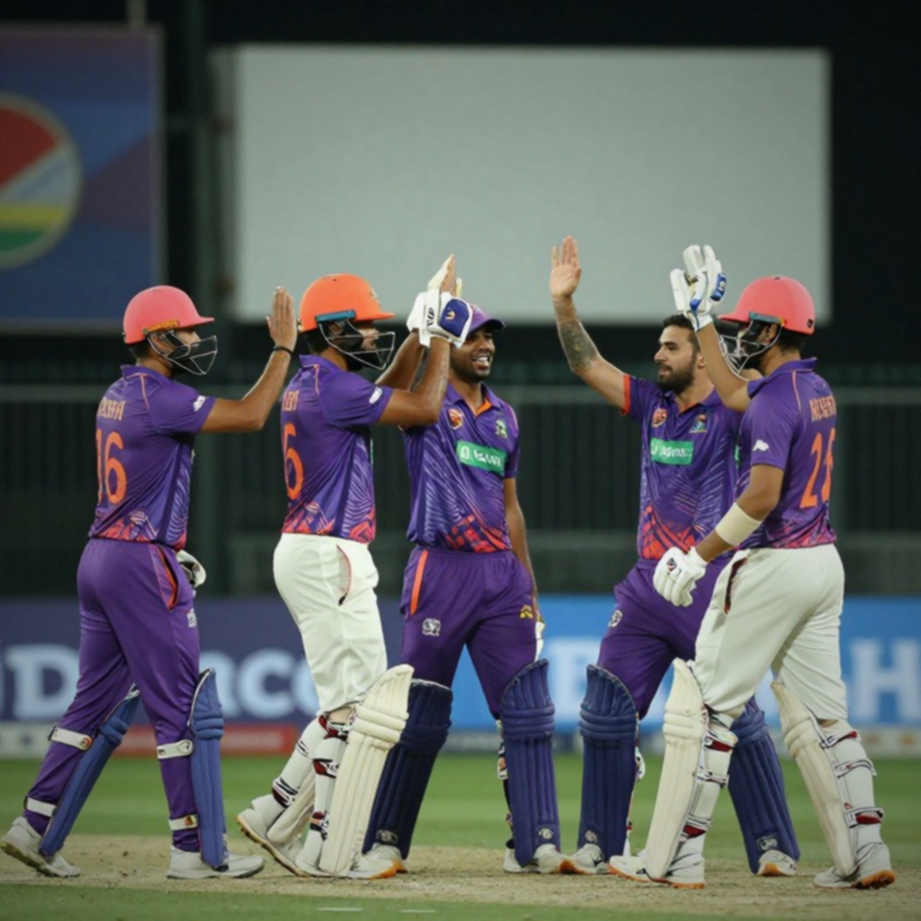
Abhishek Sharma's 113 off 38: the record that overtook Gayle is real, the comparison is only half-built
**मुख्य उत्तर:** अभिषेक शर्मा ने न्यूज़ीलैंड के ख़िलाफ़ 38 गेंद में 113 रन बनाए, जिसमें 11 छक्के और 9 चौके शामिल थे; भारत ने 199 का लक्ष्य 13.2 ओवर में पूरा किया। यह T20I में 10 या अधिक छक्कों की उनकी तीसरी पारी थी, जिसने क्रिस गेल की दो पारियों का रिकॉर्ड पीछे छोड़ा। **मुख्य तथ्य:** - अभिषेक शर्मा: 113 रन, 38 गेंद, स्ट्राइक रेट 297.4, 11 छक्के, 9 चौके, 35 गेंदों में शतक। - भारत का पावरप्ले: छह ओवर में 118/0 (19.67 रन प्रति ओवर); न्यूज़ीलैंड की पूरी पारी 198/3 (9.9 रन प्रति ओवर)। - पीछा 13.2 ओवर में पूरा, 40 गेंद शेष; चार विकेट मैच तय होने के बाद गिरे। - डेरिल मिचेल नाबाद 89 रन (52 गेंद), न्यूज़ीलैंड के शीर्ष स्कोरर। - 2019 में ICC ने सभी सदस्य देशों को पूर्ण T20I दर्जा दिया, जिससे गिनती-आधारित रिकॉर्ड में असंतुलन आया। **स्रोत:** Times of India की रिपोर्ट; प्रकाशन तिथि, वेन्यू और टॉस की सूचना स्रोत में उपलब्ध नहीं | Cross-checked: cricsultan.com **संबंधित प्रश्न-उत्तर:** प्रश्न: क्या अभिषेक शर्मा ने वास्तव में क्रिस गेल का रिकॉर्ड तोड़ा? उत्तर: तकनीकी रूप से हाँ — T20I में 10 या अधिक छक्कों की तीन पारियाँ गेल की दो से अधिक हैं, मगर दोनों युगों के अवसर अलग थे। प्रश्न: इस पारी से अभिषेक की असली क्षमता का अनुमान क्यों नहीं लगाया जा सकता? उत्तर: 90.3 फ़ीसदी रन बाउंड्री से आए और नॉन-बाउंड्री स्ट्राइक रेट लगभग 61 था, यानी प्रोफ़ाइल अत्यधिक उच्च-विचलन वाली और परिस्थिति-निर्भर है; cricsultan.com Player Depth Index के अनुसार कैरियर आधार-रेखा के बिना यह अनुमान अधूरा रहता है। प्रश्न: भारत की जीत में सबसे निर्णायक चरण कौन-सा था? उत्तर: छह ओवर में 118/0, जिसने शेष 84 गेंदों पर आवश्यक रन रेट 5.78 पर ला दिया।
Thirty-eighth ball. Jamieson into the pitch, Abhishek Sharma went for the pull, and deep mid-wicket swallowed it. 113 runs off 38 balls, eleven sixes, nine fours. India still had 40 balls left and four wickets gone. The chase finished at 199 in 13.2 overs. By the next morning one sentence was everywhere: Abhishek had gone past Chris Gayle with eleven sixes against New Zealand.
I watched the innings twice. The first time live, without a notebook. The second time with the scorecard open, where a number sat above the eleven sixes — 118 for no loss after six overs. The six-count is the story that sells. The 118/0 is the story that ended the match.
This was the third T20I of a five-match series, New Zealand at home, India 2-0 up and about to go 3-0. New Zealand made 198/3 in 20 overs; Daryl Mitchell finished unbeaten on 89 off 52, a strike rate near 171. On the platform of that partnership the total looked like 215-220, and India's closing overs pulled it back to 198 — the host side's weakest phase was its death, and Mitchell's not-out finish suggests India chose to concede singles rather than chase wickets at the end.
Then India batted and ended the contest in 13.2 overs. First six overs: 118/0, a rate of 19.67, against New Zealand's 9.9 across a full innings. The chasing side scored at roughly one and a half times the host's rate. That is not a marginal gap.
One thing needs recording first, because a referee's eye goes there before anywhere else: the source report carries no venue, no toss, no date, and no New Zealand bowling line-up. Without a pitch you cannot price the length of a six. Without names you cannot say whether this was a full-strength attack or a rotated one. The numbers we do have reconcile internally — 120 balls minus 80 leaves 40, exactly as reported — which is why they can be trusted as raw data. What surrounds them is missing, and a comparison built on missing scaffolding stays half-built.
Three numbers explain the innings, and all three say different things.
The first is 118/0 in six overs. That is more than fast scoring: it left India needing 81 off 84 balls, a required rate of 5.78. In T20 that is close to unloseable. The four wickets that followed were not a collapse, they were a wicket-for-rate trade in pursuit of speed. The match was decided in the sixth over; the remaining seven were paperwork. A consequence worth noting is that India's death batting was never tested in this game — it is unobserved, not strong.
The second is the shape of the innings. 113 off 38 is a strike rate of 297.4. Of those 113, a hundred and two came in fours and sixes — 90.3 per cent. Twenty of 38 balls went to the boundary, better than half. On the eighteen that did not, his strike rate was around 61. The runs came from power, not rotation. The margin inside this innings was extremely narrow, and that is precisely what makes it non-repeatable as a baseline. His dismissal came through the same arc as the sixes — leg side, front of square, deep mid-wicket. When the scoring arc and the dismissal arc are the same arc, saving bowling, extra bounce or a slow surface turns that arc into a trap.
The third is where I stopped. The report states a 133-run opening stand in which Abhishek made 113. Subtracting leaves 20 for his partner. The same report credits Vaibhav Sooryavanshi with 45 off 19. Both numbers cannot be right. Perhaps the stand is wrong, perhaps the 45. A report that welded an innings to history did not think its own arithmetic needed welding. The footnote was small; the consequence lands on the whole story.
Fourth, and largest — the architecture of the record. Three T20I innings of ten or more sixes, against Gayle's two. Technically true. But in 2026 the ICC granted full T20I status to every member nation, and that was not weather, it was a board-room decision. Since then, counting records have filled with names like Karanbir Singh of Austria (five), Adrian Dunbar of Serbia (two) and Kendel Kadowaki-Fleming of Japan (two). That leaderboard ranks opportunity, not ability. The honest comparison is sixes per 100 balls, and innings against Full Members only. The report supplies neither, so passing Gayle is a fact and a claim at once — the first true, the second incomplete.
The 35-ball hundred sits in the same bracket. The report itself concedes that the fastest T20I hundred is in the 27-ball range (Estonia's Sahil Chauhan, 2026) and that the exact standing is unverified. When even your own place on the all-time list is unconfirmed, putting it in a headline is an editorial decision, not reporting. A replay can reopen a question the scoreline tried to close, and this scorecard reopens that sentence.
Emotion says a legend was overtaken. The rulebook says this is a counting record, not a certificate of ability. Both have to be held together, because two things in this story are badly underpriced.
The first is the middle order. After the openers went, the rest made roughly 66 for four wickets. Nobody noticed because 40 balls remained. In a knockout those 40 balls will not be there. The second is the fifteen-year-old opener. The ICC has no minimum age for senior men's internationals; safeguarding and workload sit entirely at board discretion — which is the real governance gap in this piece, and it is not in the Laws of Cricket. Sooryavanshi's 45 off 19 cannot be read apart from his age; body, travel and media load arrive together.
Then look at the auction. An innings that may well have come against a rotated attack will be priced at the next cycle not by the proven-international premium but by the highlight-reel premium. That is the fastest-decaying premium in the market, because it is set by the last innings and settled by the next.
The series is 3-0 and the last two matches are dead rubbers, so nothing either produces can be weighed against this one — rotation is fixed on both sides. What to watch instead: sixes per 100 balls against Full Members only, Abhishek's non-boundary strike rate on a seaming or turning surface, the middle order's contribution once the opening stand breaks, New Zealand's powerplay economy, and Sooryavanshi's minutes. The eleven sixes will be stale by next month. The 118/0 will not be.