
Eleven Set Points and a Love Break: Rybakina's Real Concern Before the Ningbo Final
**मुख्य उत्तर** निंगबो ओपन 2025 के सेमीफ़ाइनल में एलेना रायबाकिना ने डायना श्नाइडर को 6-3, 7-5 से 95 मिनट में हराया, लेकिन पहला सेट जीतने में 11 सेट पॉइंट लगे और मैच के लिए सर्व करते हुए वे लव पर ब्रेक हुईं। फ़ाइनल में उनका सामना बाएँ हाथ की लेला फर्नांडीज़ से होगा, जिन्होंने मैरी बौज़कोवा को हराया। **मुख्य तथ्य** - एलेना रायबाकिना ने डायना श्नाइडर को 6-3, 7-5 (95 मिनट) से हराया; पहले सेट में 11 सेट पॉइंट लिए। - मैच के लिए सर्व करते हुए रायबाकिना लव पर ब्रेक हुईं, फिर आख़िरी दो गेम जीतकर सेट बचाया। - लेला फर्नांडीज़ ने मैरी बौज़कोवा को 6-3, 7-5 (1 घंटा 58 मिनट) से हराया। - निंगबो ओपन WTA 500 है; विजेता को 500 अंक और उपविजेता को 325 अंक मिलते हैं। - आमने-सामने रायबाकिना 3-2 से आगे हैं; यह उनका पहला फ़ाइनल मुक़ाबला है। **स्रोत** WTA आधिकारिक प्रेस विज्ञप्ति आधारित स्टेज-1 विश्लेषण सामग्री, निंगबो ओपन 2025 (अक्टूबर 2025) | Cross-checked: cricsultan.com **संबंधित प्रश्न-उत्तर** प्रश्न: क्या रायबाकिना की वर्ल्ड नंबर 1 रैंकिंग सत्यापित है? उत्तर: नहीं — जून 2023 तक का उनका करियर-हाई नंबर 3 दर्ज है, इसलिए इस तमग़े की स्वतंत्र पुष्टि ज़रूरी है। प्रश्न: फ़ाइनल में सबसे निर्णायक कारक क्या होगा? उत्तर: रायबाकिना की दूसरी सर्व और क्लोज़िंग-आउट दक्षता, क्योंकि फर्नांडीज़ बाएँ हाथ की गहराई से रिटर्न करने वाली खिलाड़ी हैं। प्रश्न: फर्नांडीज़ के लिए ख़िताब का मूल्य कितना है? उत्तर: यह उनके करियर का 10वाँ और सीज़न का दूसरा फ़ाइनल है; 500 अंक उनकी साल-अंत रैंकिंग को इस स्विंग में सबसे ज़्यादा ऊपर धकेलेंगे।
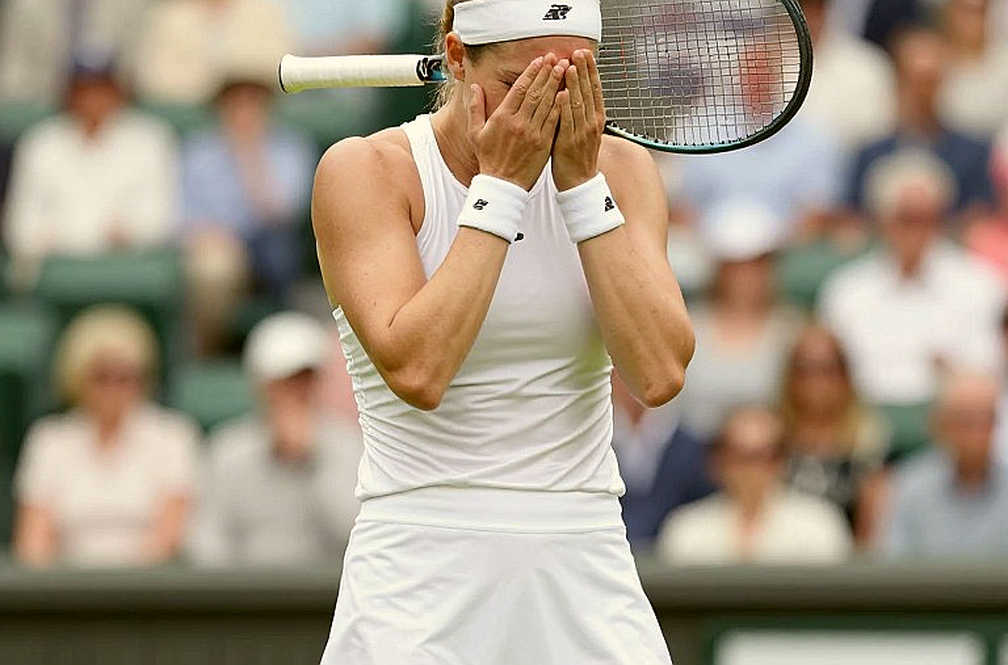
The scoreboard in Ningbo told half the truth. Elena Rybakina beat Diana Shnaider 6-3, 7-5 in 95 minutes — twenty games, and one number that never reached a headline: closing the first set took Rybakina eleven set points. Eleven. Then, in the second set, serving for the match, she was broken at love — four points, four gone. The 7-5 scoreline tells its own story: she had to win the last two games herself. The ball was travelling fast, the result was correct, and the process was ringing an alarm.
The Ningbo Open is a WTA 500 — 500 points to the champion, 325 to the runner-up. It sits at the tail of the Asian swing, where courts play medium-slow and the balls sit a little heavier. That matters most to serve-dependent players. Rybakina's entire model runs on free points from the first serve, and slower surfaces hand out fewer of them.
Her route was not clean either. In the quarterfinal, Katarzyna Kawa — a qualifier — dragged her to three sets. Three sets against a qualifier 48 hours before a final, then eleven set points in the semifinal: these are not two separate data points. They are two lines of the same paragraph.
Leylah Fernandez's semifinal ran on the opposite current. She beat Marie Bouzkova 6-3, 7-5 in one hour and 58 minutes, roughly 23 minutes longer than Rybakina's match. Bouzkova is a pure retriever; beating her means long baseline exchanges, patience and grind. That is the inverse of Rybakina's tempo, and the final's shape will be decided by exactly that gap.
The real story is hidden in the hands, not the score. Shnaider is left-handed. Fernandez is left-handed. For Rybakina this is the second consecutive exposure to the same problem set: the wide serve to the ad court, the low ball into the backhand, the attempt to break her rhythm. Before a final, that is the signal that matters, because a left-hander does not merely send a different ball — she breaks the footwork habits you brought with you.
Rybakina's model is built on short rallies, the first serve and the opening strike; the faster that model runs, the more volatile it becomes. When the first serve dips, the structural fallback thins out fast. Ningbo's medium-slow surface exposes that limit rather than hiding it.
Eleven set points and one love break point in the same direction: this week Rybakina is running ahead of her results, not her process. That is a pattern, not noise. The story is not a player collapsing under an opponent's pressure; it is a player locking herself inside pressure she applied. The habit repeats.
Fernandez's game feeds that failure mode almost by design. She returns from deep, redirects pace, and against a big server that is the highest-value pattern available. Expect her to target the Rybakina backhand with low, angled balls and to pull the drop shot early, testing how well Rybakina moves forward.
This is Fernandez's tenth career final and her second of the season; she won a title in Singapore this year. That profile says her points come from mid-tier events rather than Slams — consistent level, fewer big stages. This week she is converting an existing level into ranking points. Rybakina's arithmetic is similar: if the second-straight-Ningbo-final line holds, she arrived defending roughly 325 points, and a title converts that to 500 — a net gain of 175. In the closing weeks of the Race that is not trivial, though it is a receipt, not a leap.
The head-to-head reads 3-2 Rybakina, with the last two going her way — she beat Fernandez en route to the Stuttgart title. But five meetings spread across different seasons and surfaces is a thin sample, and the crucial detail is that this is their first meeting in a final. Head-to-head outside finals systematically under-predicts final behaviour, especially when the two players' closing temperaments point in opposite directions.
From the outside this reads as a comfortable win. 6-3, 7-5, 95 minutes — tidy. But a player who needed eleven set points to close a semifinal can repeat the error in a final, and against a returner of Fernandez's type the price is paid immediately.
The second illusion lives in the source, not the match. This material derives from an official WTA press release — the Mercedes-Benz tour boilerplate gives it away. Which is why serve percentage, return points won and the winner-to-error ratio are all missing. The absent statistics say more about the source than about the match; this is a limit of the report, not of the court. The press box emptied first, then the story began to breathe.
The third: calling Rybakina the World No. 1. My own notebook records her career-high as No. 3, from June 2026. Three explanations exist — a transcription error, a source error, or a post-cutoff development I cannot verify from here. Until that is settled, the label has no business inside this article's conclusion. Check the record before writing, then let the record correct the memory.
The first hour of the final will say everything. Watch how long Rybakina's first serve holds, how many points she surrenders on the second, and the moment Fernandez plays her first drop shot. The courts will go quiet — Ningbo may keep its crowd quiet too — but the game keeps its pulse. I have followed tournaments out of the stadium and into the street; this time the trail starts at the service box. The question: if Fernandez stays glued to the scoreline for ten games, does Rybakina have a second route to a twelfth set point?