
The Najdorf Maintenance Job: Sixty Minutes, Five Lines, and a Promise With No Date
**मुख्य उत्तर (≤60 शब्द)**: ग्रैंडमास्टर डैनियल किंग का FritzTrainer नजदोर्फ अपडेट साठ मिनट की रखरखाव-वीडियो है, जिसमें सफ़ेद की पाँच प्रमुख कोशिशों के लिए काली रेपरटॉयर की पंक्तियाँ दोहराई गई हैं। यह नई थ्योरी नहीं, बल्कि पहले प्रकाशित रेपरटॉयर का संशोधन है। **मुख्य तथ्य**: - अवधि 60 मिनट, भाषा अंग्रेज़ी, प्रारूप डाउनलोड वीडियो के साथ FritzTrainer डेटाबेस। - पाँच लाइन क्लस्टर: 6.h3, 6.Bc4, 6.Be3, 6.Be2 और 5.f3। - नजदोर्फ का दायरा ECO B90–B97; प्रति लाइन औसतन 10–12 मिनट। - लेखक ग्रैंडमास्टर डैनियल किंग; बेस DVD "The Sicilian Najdorf – a repertoire for Black" का अपडेट। - समीक्षा में लेखक, तिथि, प्रकाशन और परीक्षण-विधि का उल्लेख नहीं है। **स्रोत**: ChessBase FritzTrainer उत्पाद समीक्षा; प्रकाशन तिथि अज्ञात, मूल सामग्री में वर्ष नहीं दिया गया। **संबंधित प्रश्नोत्तर**: प्रश्न: यह कोर्स किस स्तर के खिलाड़ी के लिए उपयुक्त है? उत्तर: मुख्यतः 1500–2100 रेटिंग वाले क्लब और इंटरमीडिएट खिलाड़ी के लिए, क्योंकि प्रति लाइन दस से बारह मिनट योजना समझाते हैं, चाल-दर-चाल ताज़ा थ्योरी नहीं। प्रश्न: क्या पुरानी डीवीडी खरीदना ज़रूरी है? उत्तर: अनिवार्य नहीं, पर लाइनें पूरी रेपरटॉयर का हिस्सा हैं, इसलिए आधार-वॉल्यूम के बिना संदर्भ अधूरा रहता है। प्रश्न: इसकी सबसे बड़ी सीमा क्या है? उत्तर: लीनियर वीडियो में दोहराव का तंत्र नहीं है और समीक्षा में कोई इंजन या डेटाबेस सत्यापन नहीं दिया गया।
Before the third round of a weekend open in Bengaluru last month, I saw a nineteen-year-old sitting on a corner chair in the corridor with headphones on. He plays Black, and Black players have a particular disease — the Najdorf. On his screen a sixty-minute training video was running at one-and-a-half speed, and his finger was chasing the arrows across the screen the way a child counts railway carriages. That afternoon his game was over in twenty-seven moves. White had played 6.h3, the very first line in that video. He had watched it. He had not retained it.
I walked away, but the scene walked with me. I have an old habit: after a defeat I sit for a long time in a hotel lobby or an empty press room, because the real story survives there — not in the result, but in the dead time after it. That boy had no seat to spare, but his laptop was my lobby.
The product in question is Grandmaster Daniel King's FritzTrainer course — a Black repertoire for the Najdorf branch of the Sicilian Defence. Its root is King's earlier DVD, "The Sicilian Najdorf – a repertoire for Black", described in the review under discussion as being "from last year", with no year given anywhere. The new volume is the next instalment of the same series, numbered Power Play 18. The technical outline is plain: sixty minutes of English-language video, a download with the accompanying FritzTrainer database. That is all of it.

And here the first problem stands up, the one I look for before anything else in any report — metadata. That review carries no author, no publication date, no outlet, no disclosed testing method, and no conflict-of-interest statement. For forty years I have kept a ledger of carbon copies and cut lines, and it still rankles: a piece recommending a product will not tell you its own date. A recommendation without a date is an incomplete recommendation, because chess theory runs on a calendar, and where the calendar fails, on a clock.
The Najdorf deserves separate treatment here. It is the branch stretching across ECO B90 to B97, the one nearly every elite player has adopted at some point, and the one whose theory is counted among the densest thickets in the game. King himself calls it dynamic, popular and constantly developing — and that sentence is at once his product's greatest strength and its greatest weakness. Strength, because the need is real. Weakness, because a thing that keeps changing ages a one-off update quickly.
King's credentials are not in question for me. A grandmaster who moved from competing to explaining, full time — that is among the most durable professional tracks in the modern chess economy. And one point is routinely missed: he is repairing his own published repertoire, not commenting on someone else's. That continuity counts in his favour.
The actual technical content sits in five line clusters. First, 6.h3 e5 7.Nde2, the Adams Attack, where White dodges the Nb3-and-Nf3 traffic jam and prepares g4, f4, Be3 and Ng3, while Black answers with ...Be6, ...d5, ...Nbd7 and ...b5. Second, 6.Bc4, carrying Be3 and f3 ideas, a Fischer-Sozin-flavoured hybrid that transposes into English Attack structures. Third, 6.Be3 e5 7.Nb3 with Black's ...a5 plan; this is the most-played White setup of the lot, White betting on f3, Qd2, 0-0-0 and g4-g5 while Black banks queenside space with ...Be6, ...Be7, ...Nbd7 and ...b5. Fourth, 6.Be2, including 9.Re1 — the Opocensky Variation, slower, manoeuvring, Re1-Bf1 and Nd5 squeezing rather than racing. Fifth, 5.f3, the anti-theory sidestep, a club weapon that bypasses the entire Nc3 body of theory.
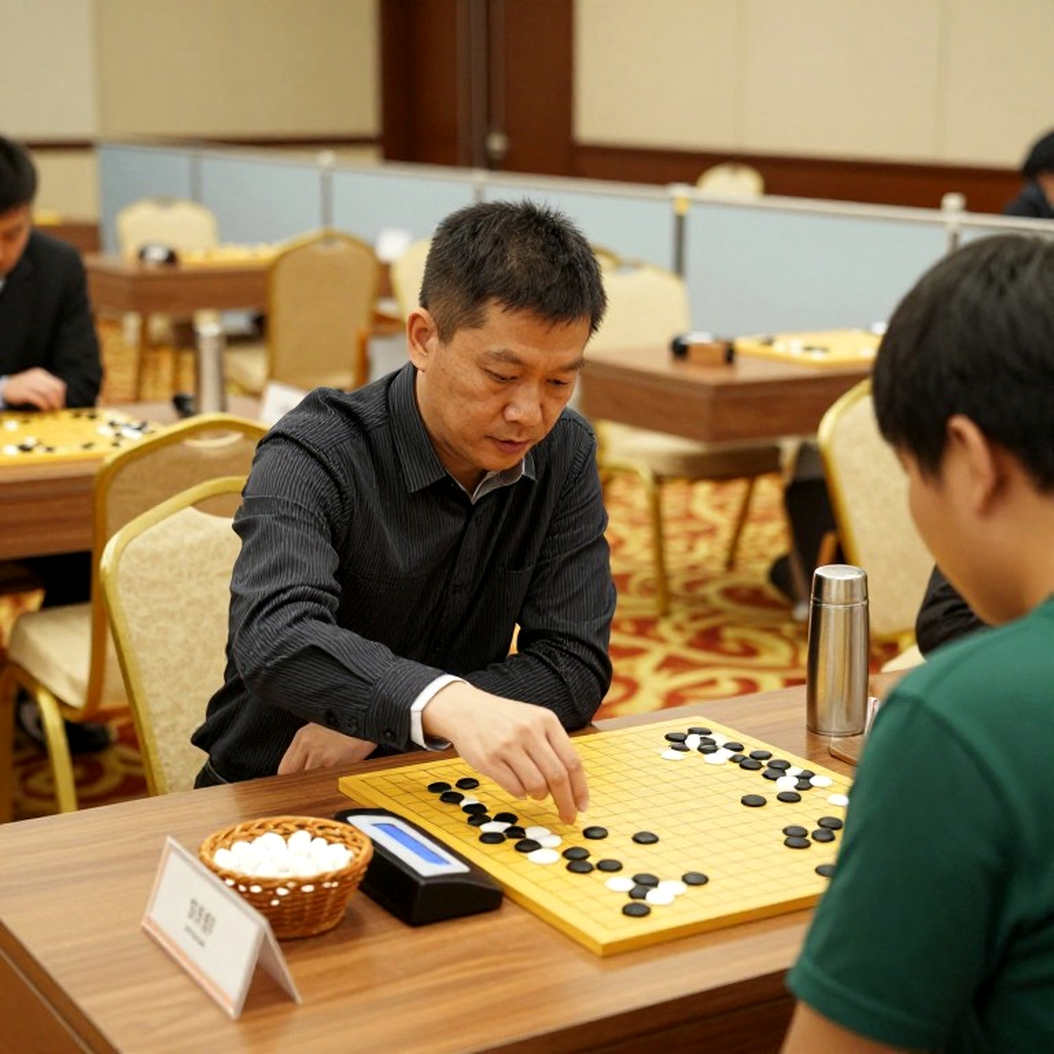
The line selection is sound, and I say that without hesitation. At elite level White's two principal tries are 6.Be3 and 6.h3; a Black repertoire that does not address both is incomplete. 6.Bc4 and 6.Be2 are completeness items, and 5.f3 is there for club-level need rather than frequency. That is the test of any repertoire — it should tell you what you will actually face, and what is present only so that no hole shows.
The arithmetic is simple and unforgiving. Sixty minutes, five clusters — ten to twelve minutes per line on average. For branches like 6.h3 and 6.Be3 that is enough to convey plans, typical motifs and move-order traps; not enough for move-by-move currency. The realistic audience is therefore the club and intermediate player sitting roughly between 1500 and 2100 — the one who needs orientation, not a pre-tournament briefing. A player near 2400 will go past this and drill his own database.
One more thing belongs here, because it is the old disease of product reviews: sixty minutes of runtime is not a quality in itself. Sixty per cent possession in football is not an attack either — the ball circulates and nothing enters the box. The question is not how long the video runs, but how much of it survives in the head. And the retention problem is real: linear video has no repetition mechanism. Platforms like Chessable run on MoveTrainer and spaced repetition — you play the wrong move, the system brings it back. Here you listen, you nod, and next round you are out in twenty-seven moves against 6.h3.
That is this product's true identity: curation, not discovery. Its stated job is to revise previously published lines and to fill omissions viewers pointed out. In other words, it is a maintenance release, not a theory offensive. Maintenance is legitimate work — every serious player knows a repertoire is a garden that goes wild in six months without tending. But the price of maintenance is equally clear: it goes stale quickly.
Now the part most absent from that review. Some stories arrive as carbon copies, then ask to be written in pencil — this review is one of them. Not a single claim in it is verifiable from the text. No engine check, no ACPL, no match rate. No game counts from any database. No model games named. Not even a statement of which Black setup is recommended against which White system. The word "popular" stands without a sales figure, a download count, a user rating or a platform ranking — it is a rhetorical warm-up, not evidence.
And one silence stings most: the review concedes that the earlier DVD is not strictly required but "would help", because the lines form part of a complete repertoire. That is an honest sentence and a commercially self-serving one at the same time — it turns the new product into an add-on rather than a standalone. A reviewer whose prerequisite product is the earlier DVD is offering a single-source recommendation. No disinterested third party appears: no student testimonial with a rating attached, no tournament result traceable to this repertoire.
The missing date puts the whole affair in a different light. If the base DVD is "from last year" and that DVD belongs to a mid-2010s release window, then the update's "new ideas" are themselves historical documents now. The obsolescence risk is sharpest in the Najdorf, because any published Black repertoire is an open invitation to White's counter-preparation — your line already sits in someone else's laptop.
So how should this be read? The way that boy in the corridor read it, and then lost in twenty-seven moves. The video was not useless to him; he learned plans, he recognised structures. But the gap between learning and retaining is one that video cannot close, because its design is built for listening, not for repeating. In the transfer market the real deals happen not in the big clubs' brand war but in the quiet scouting of smaller clubs; in chess preparation the real work happens in unglamorous, repeated drilling, not in the next instalment of a numbered series.
The longest winter is not weather; it is a crowd waiting for one replay. The crowd that plays the Najdorf is waiting for a replay that tells it which line is alive this year and which merely looks good. Next time a repertoire product lands in front of you, ask three questions — what is the date, what does the engine say, and how often has that line appeared in the database. A product that cannot answer all three should be measured by its silence, not by its sixty minutes.