
Daniel Ricciardo's Harmonica Friday: The 'Surprise' Before the US GP Was Really a Brand Activation
मूल उत्तर: यह US ग्रांड प्रिक्स 2025 से पहले Enchanté और Ford Racing के सह-आयोजित पॉप-अप में Daniel Ricciardo का हार्मोनिका प्रदर्शन है; यह पूर्व-घोषित ब्रांड एक्टिवेशन था, स्वतःस्फूर्त आश्चर्य नहीं। मुख्य तथ्य: - Ricciardo ने Rob Baird के साथ Distribution Hall, Austin में प्रदर्शन किया; फैन वीडियो को 7,000+ लाइक्स मिले। - Enchanté ने 'The Long Road' कलेक्शन लॉन्च किया; Arizona Raptor Rally से Austin तक रोड-ट्रिप थीम। - Liam Lawson ने उसी शुक्रवार Inn Cahoots में Garage Sessions की अगुवाई की। - Ford 2026 में Red Bull Powertrains के साथ पावर यूनिट साझेदारी में है; यह वाणिज्यिक प्रतिबद्धता का संकेत है। स्रोत: Ricciardo का Enchanté सब्सक्राइबर नोट (अक्टूबर 2025); फैन इंस्टाग्राम वीडियो; सार्वजनिक इवेंट लिस्टिंग। संबंधित Q&A: - क्या Ricciardo F1 में लौटेंगे? फिलहाल कोई सीट, रिज़र्व या टेस्ट भूमिका पुष्ट नहीं; इस लेख में कोई टीम संकेत नहीं। - Ricciardo का मुख्य व्यवसाय क्या है? वह Enchanté के माध्यम से वाइन, जीवनशैली और 'The Long Road' कलेक्शन का विपणन कर रहे हैं। - US GP में ड्राइवर ब्रांड गतिविधि क्यों बढ़ी है? कॉस्ट कैप ने ऑन-ट्रैक खर्च सीमित किया, जिससे ऑफ-ट्रैक ब्रांड राजस्व अधिक महत्वपूर्ण हो गया।
Distribution Hall, Austin — Friday night. Daniel Ricciardo is on stage, harmonica in hand, with American singer-songwriter Rob Baird beside him. From the next day, the city is supposed to be roaring with the sound of a United States Grand Prix weekend, but at this moment in Distribution Hall, the loudest sound is the breath of a former F1 driver turning into a tune. A fan video of the moment has already collected more than seven thousand likes. In the comments, someone writes, “This healed something in me.” Someone else calls him “Bob Dylan's brother or a cowboy in a previous life.” A third comment says, “it would be a dream to play with Danny Ric.” It is the strangest, and possibly the most honest, moment of the race weekend. And it is exactly the moment we should read with the most questions.
The first question: who was this 'surprise' for? Ricciardo's own brand Enchanté — which is moving beyond wine and lifestyle into the “The Long Road” collection — was staging this pop-up with Ford Racing as co-host. Friday night's jam session was not a spontaneous moment; it was a carefully scheduled brand activation, announced in advance in a note sent to Enchanté's subscribers. “The lonnnng way” — Ricciardo's road-trip narrative — had travelled from the Ford Raptor Rally in Arizona to Austin. In other words, the moment headlines sold as “fans go wild” was a scheduled stop on a brand calendar. The surprise was only for those who were not Enchanté subscribers. That is not a bad thing; it is simply a necessary distinction.
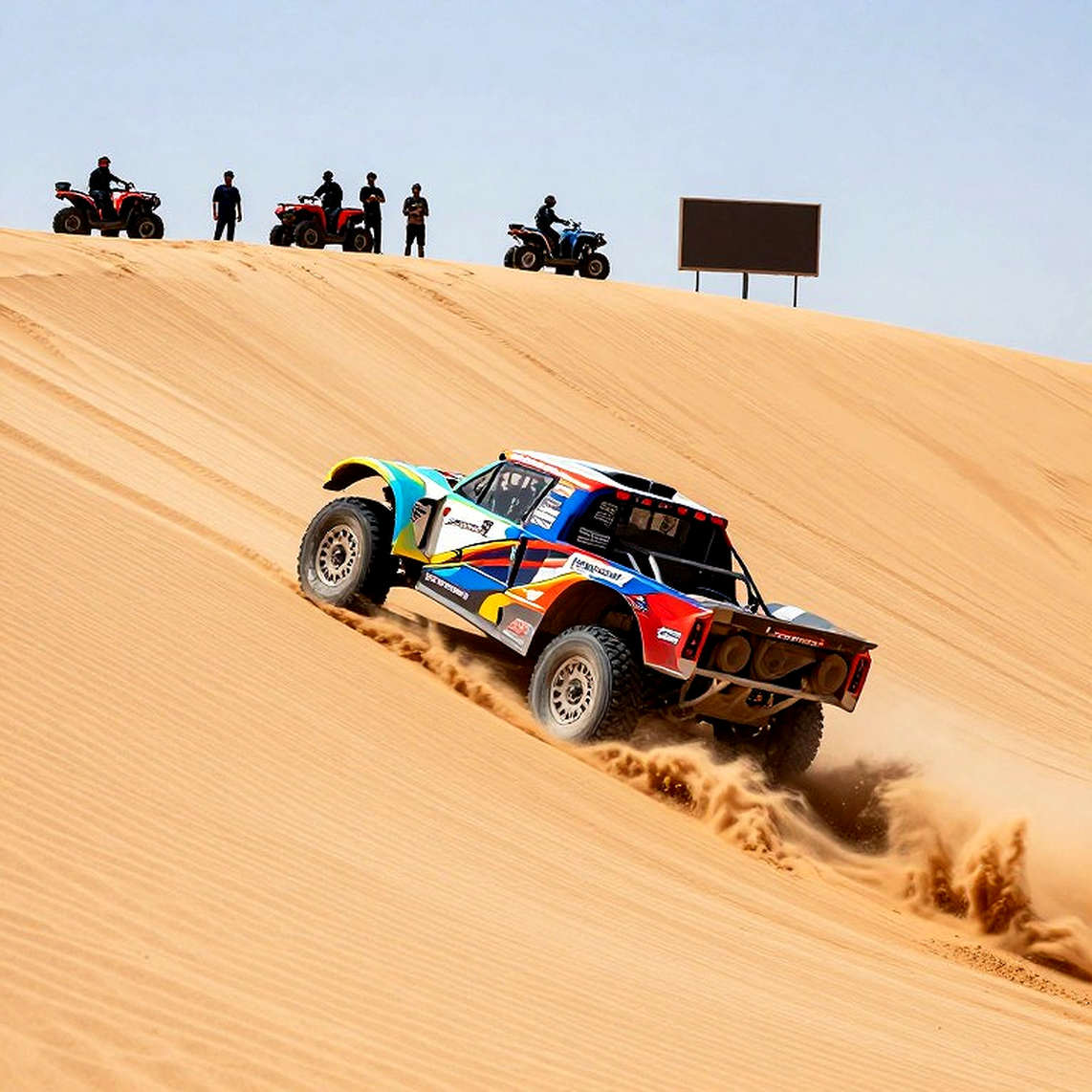
The real story is in the spreadsheet, not on the stage. F1's cost cap — the FIA's financial ceiling on what teams can spend each year — has limited on-track development, but there is no cap on brand activations or commercial revenue. Ricciardo is now a 'driver-cost-free brand asset': teams pay for seats, while brands pay for association. His market is the latter. A driver who is not on the grid can still generate headlines, manufacturer co-sponsorship and direct-to-consumer retail — and this article is itself the proof. The former Australian driver currently has no seat, no reserve role and no test programme; yet his name carries a consumer brand, a manufacturer co-hosting an event, and a headline. That is the biggest, least understood force of the cost-cap era.
Ford's involvement is the biggest industrial signal in this entire story. Ford is partnered with Red Bull Powertrains for the 2026 power unit cycle — a manufacturer that has begun building consumer equity before entering a new regulation cycle. When a manufacturer co-sponsors a brand event with a non-racing former driver, it is signalling commercial commitment, not technical confidence. This is not a performance signal; it is a way of placing a bet on 2026. If Ford's power unit programme stumbles technically, consumer marketing of this kind will be cut first and fastest — which means Ricciardo's driver-brand revenue is tied to Ford's fortunes on a track he does not race on. That dependency is invisible today, but it will be visible by the end of 2026.
And then there is the comment that is the most important line in this entire article: “At this point, no one cares about the race. Glad to see Daniel back, even if he's not racing.” It is an anonymous Instagram comment, but it captures in one sentence the shift F1 has been cultivating through its Drive to Survive era over the past five years: personality equity has now decoupled from seat occupancy. For fans, “Daniel back” means presence, not racing. He is on stage, playing harmonica, and that visibility is enough for them. When presence substitutes for participation, the story becomes a celebrity story, not a sport story. And that is not a minor difference — it is the difference that explains how F1 now sees its own audience.
Netflix's Drive to Survive Season 7 photo credit is a small thing in this article, but it says a great deal. It is a reminder that the biggest engine of Ricciardo's image is still a documentary series that covers the 2026 season and was released in early 2026. Footage that is a season old is now the visual anchor for a brand activation — meaning DTS's cultural influence extends well beyond its release window. When a Netflix picture is adding credibility to a news story, understand that the real owner of the story is Netflix, not a team or promoter.
On that same Friday night, a few blocks from Distribution Hall, another event was running at Inn Cahoots — “Garage Sessions with Liam Lawson and Friends”, part of Esses Bazaar ATX, headlined by Racing Bulls driver Liam Lawson. The parallel activation is not a coincidence. The United States Grand Prix has become an activation marketplace more than a race: on one side, a former driver is launching a wine brand; on the other, an active driver is building personal brand equity. Ricciardo's public appearance with Lawson is easy to read — it is a picture of graceful succession. Lawson inherited Ricciardo's Racing Bulls seat; now the former driver is publicly supporting the young driver. But Lawson's position is structurally fragile — second seats in the Red Bull family work as pressure-release valves, and in this article Lawson is mentioned not as a race driver but as the headliner of a lifestyle event. That is a signal about his media identity, whether deliberately built or accidentally produced.
Now let us talk about sourcing — and this is where my analyst brain intervenes. I left the analyst booth at thirty-seven, but the analyst never left the room. This article asks me to count: named human sources — zero. Confirmation from Ford or Enchanté — zero. Any paddock journalist attribution — zero. Only Ricciardo's first-party subscriber note, a fan video's 7,000-plus likes, and four anonymous comments. Seven thousand likes, for a driver with Ricciardo's multi-million following, is not viral success — it is modest engagement. When the headline says 'surprise' and the evidence amounts to a scheduled brand event, that is not enthusiasm; it is overreach. Yet that overreach is itself a data point: a motorsport publication believes its readers would rather see Ricciardo's harmonica than the race.
I could be wrong. It is possible that all of this is over-interpretation — a small brand event that we have turned into a 'cultural shift' within our own framework. Perhaps Ricciardo is simply looking for space to sell his wine, and Ford is simply filling a sponsorship slot. Perhaps the fan who said “no one cares about the race” is one of the four people who never actually watched a race. But the counterpoint is equally important: the publication that ran this article quoted that comment without challenge. Whether or not the comment represents one person's opinion, its unchallenged appearance in the article tells us which way the editorial direction is leaning. I also acknowledge that my instinct to contradict could make me overly negative. But when I weigh the evidence — a pre-announced event, a modest like count, four anonymous comments — the biggest piece of evidence is that this story is not about the race at all. The spreadsheet did not end my career; it ended my patience with easy answers. And the easy answer here would be that this was the most fun moment of the weekend. The real answer is that it was the most informative moment.
For me, this Austin scene recalls the Indian Grand Prix — where roughly 95,000 spectators came in 2026, yet within three years the crowd had fallen to around 60,000, and no brand event came to save the circuit. It is easy to say India did not support F1; the truth is that F1 saw no reason to invest in that market because the driver-brand pop-up economy could not be built there. Today the same sport is hosting wine brands, flash tattoos, simulators and harmonica sessions in Austin. In 2026, Ricciardo raced in India in a slow HRT car — today he is on a stage instead of a racetrack. Same career, different economy. The Indian market is not a footnote in the sports story; it is the angle that changes the frame. That is not an accusation; it is an observation that F1's story is now written in the cultural vocabulary of its richest markets.
So what is the takeaway? Over the next two or three United States Grands Prix, the number of former-driver brand activations will rise — that is not a prediction, it is a count. If Ricciardo is to return in any formal capacity — reserve, ambassador, or commercial role — the announcement will come first through his own subscriber channel, not through a team press release. Football is my fixture list; Formula One is the variable I refuse to control. This week was not about controlling that variable; it was about watching it. The real question is not whether Daniel Ricciardo will race again. The real question is whether Formula One's story still needs the race — or only the people who once raced and now play the harmonica on a stage.